ASTM D2538-02
 Preview
Summary
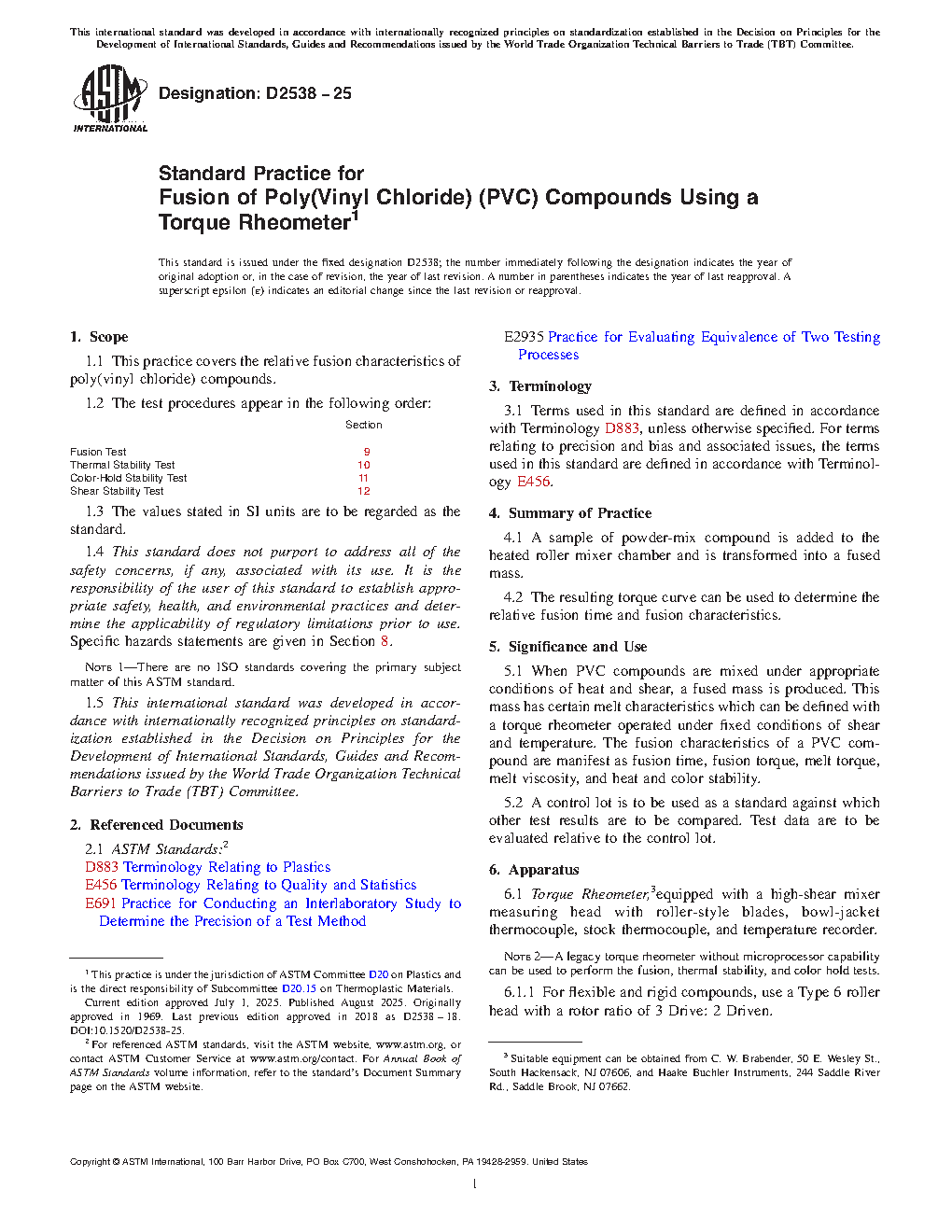
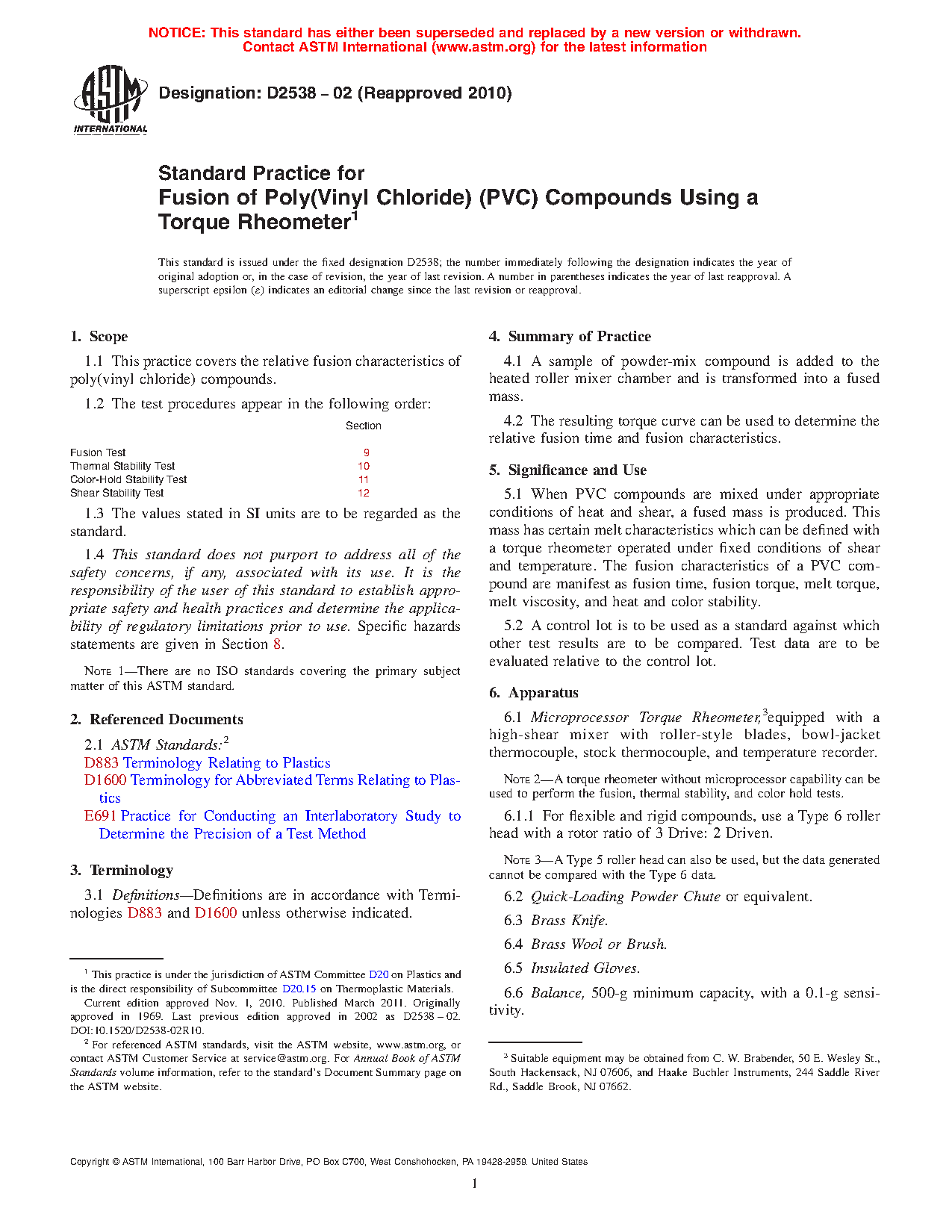
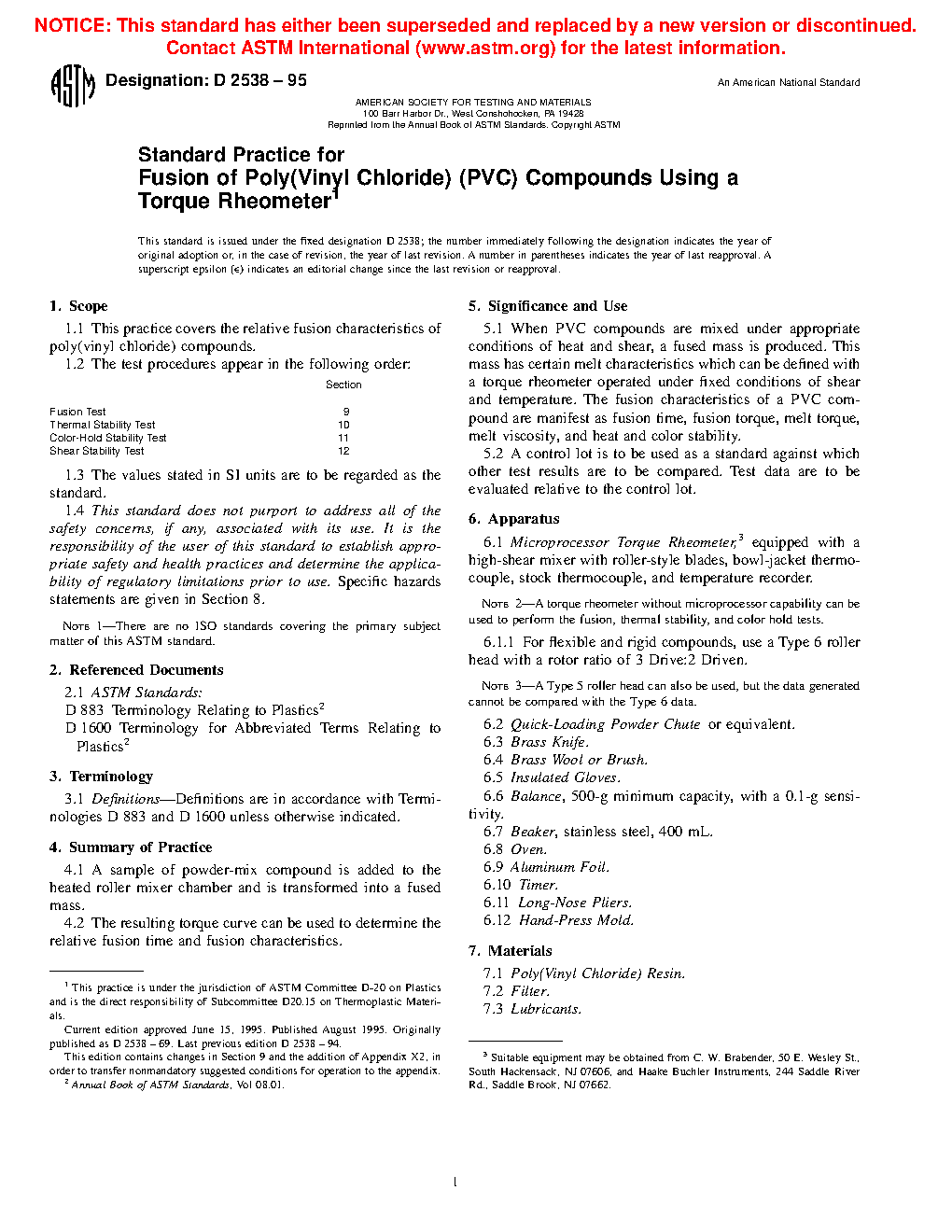
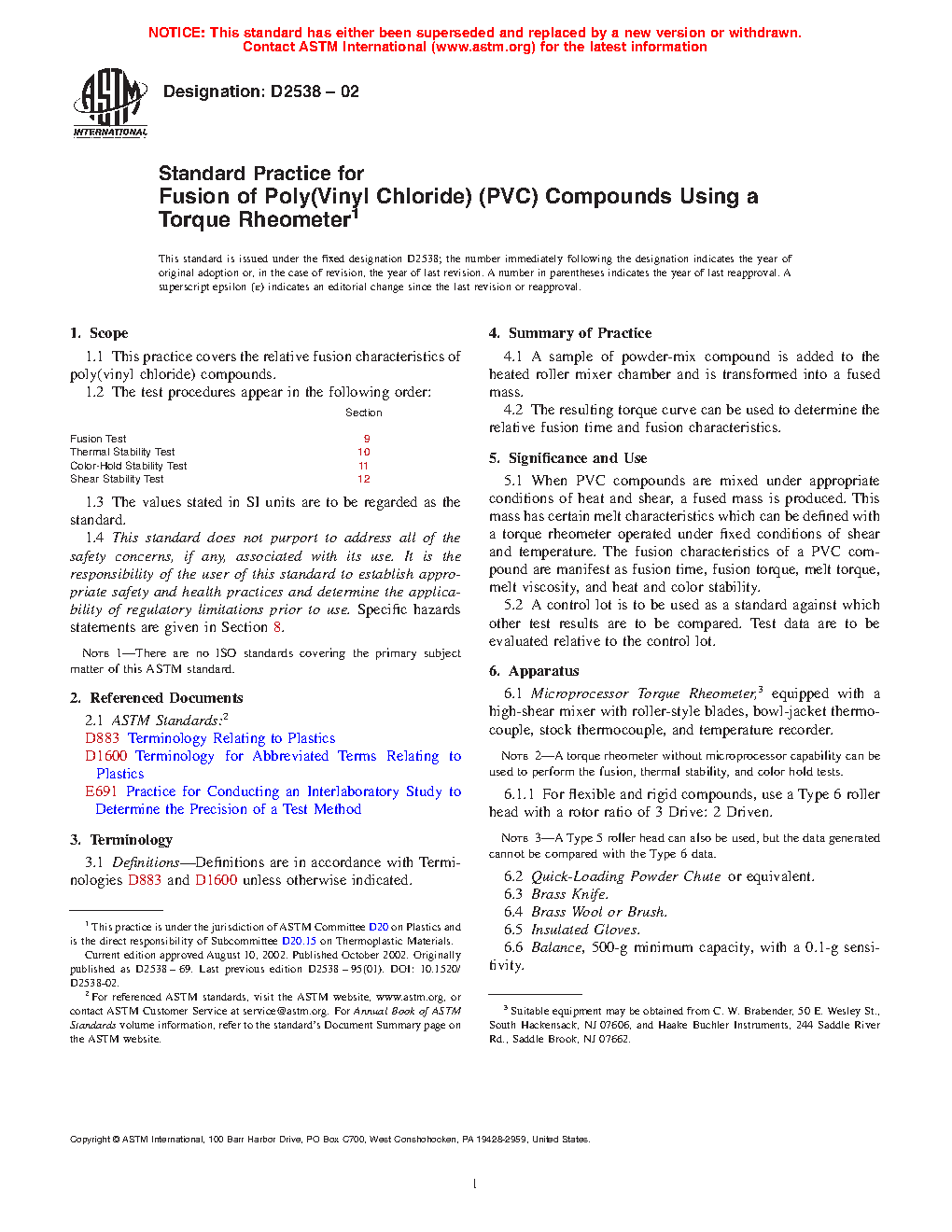
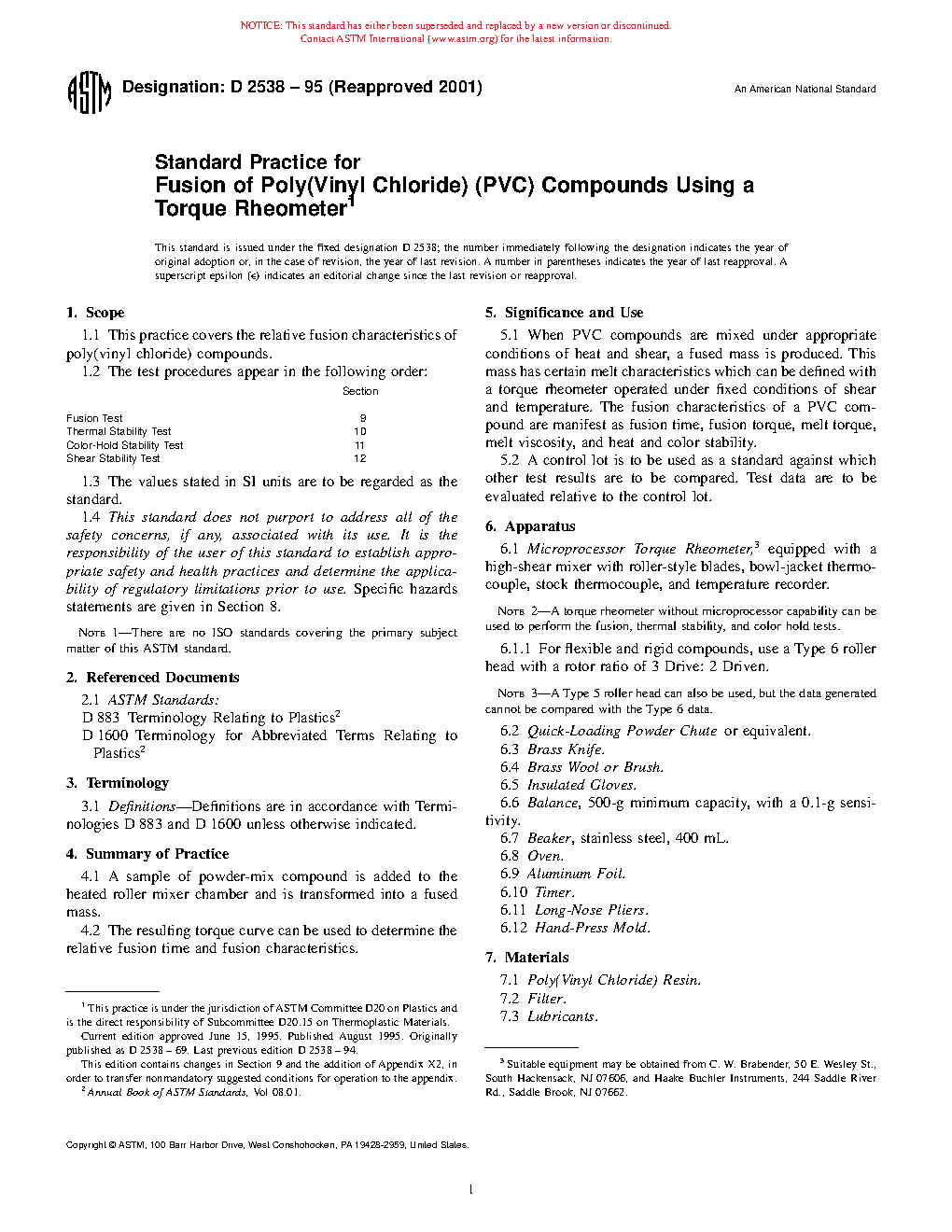
1.1 This practice covers the relative fusion characteristics of poly(vinyl chloride) compounds.
1.2 The test procedures appear in the following order:
| Section | |
| Fusion Test | 9 |
| Thermal Stability Test | 10 |
| Color-Hold Stability Test | 11 |
| Shear Stability Test | 12 |
1.3 The values stated in SI units are to be regarded as the standard.
1.4 This standard does not purport to address all of the safety concerns, if any, associated with its use. It is the responsibility of the user of this standard to establish appropriate safety and health practices and determine the applicability of regulatory limitations prior to use. Specific hazards statements are given in Section 8 .
Note 1—There are no ISO standards covering the primary subject matter of this ASTM standard.
Significance and Use:
When PVC compounds are mixed under appropriate conditions of heat and shear, a fused mass is produced. This mass has certain melt characteristics which can be defined with a torque rheometer operated under fixed conditions of shear and temperature. The fusion characteristics of a PVC compound are manifest as fusion time, fusion torque, melt torque, melt viscosity, and heat and color stability.
A control lot is to be used as a standard against which other test results are to be compared. Test data are to be evaluated relative to the control lot.
Technical characteristics
| Publisher | American Society for Testing and Materials (ASTM International) |
| Publication Date | 08/10/2002 |
| Collection | |
| Page Count | 6 |
| Themes | Thermoplastic materials |
| EAN | --- |
| ISBN | --- |
| Weight (in grams) | --- |
Replaces
Previous versions