ASTM D4443-95(2002) (R1995)
 Preview
Summary
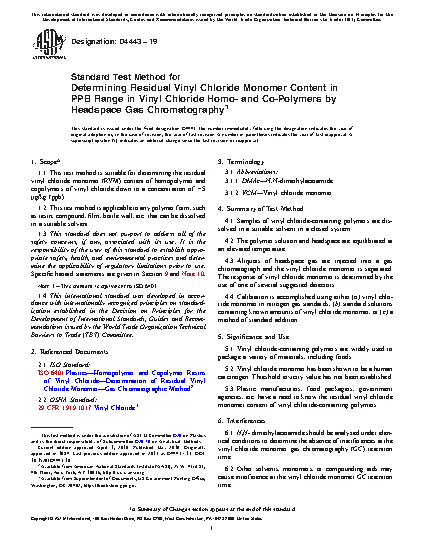
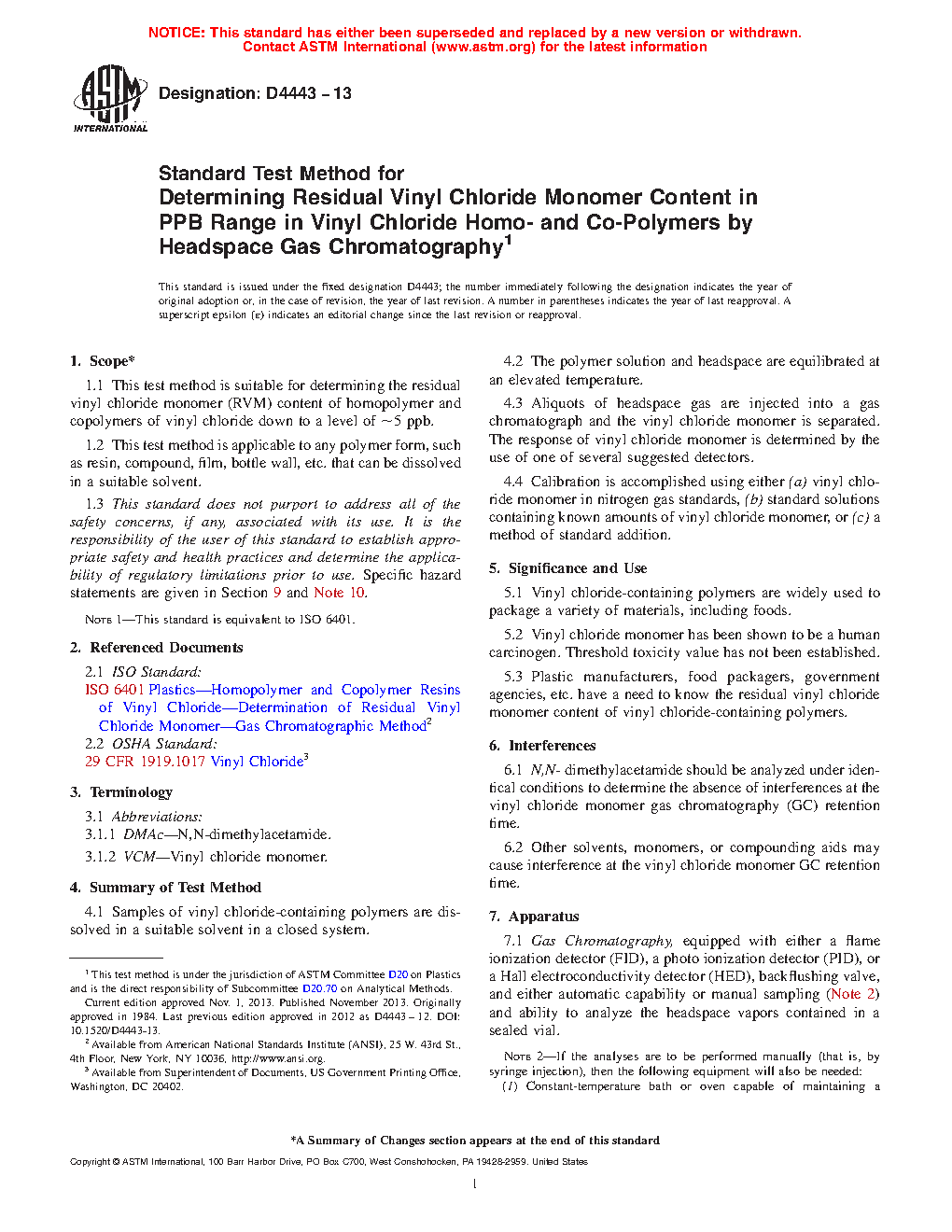
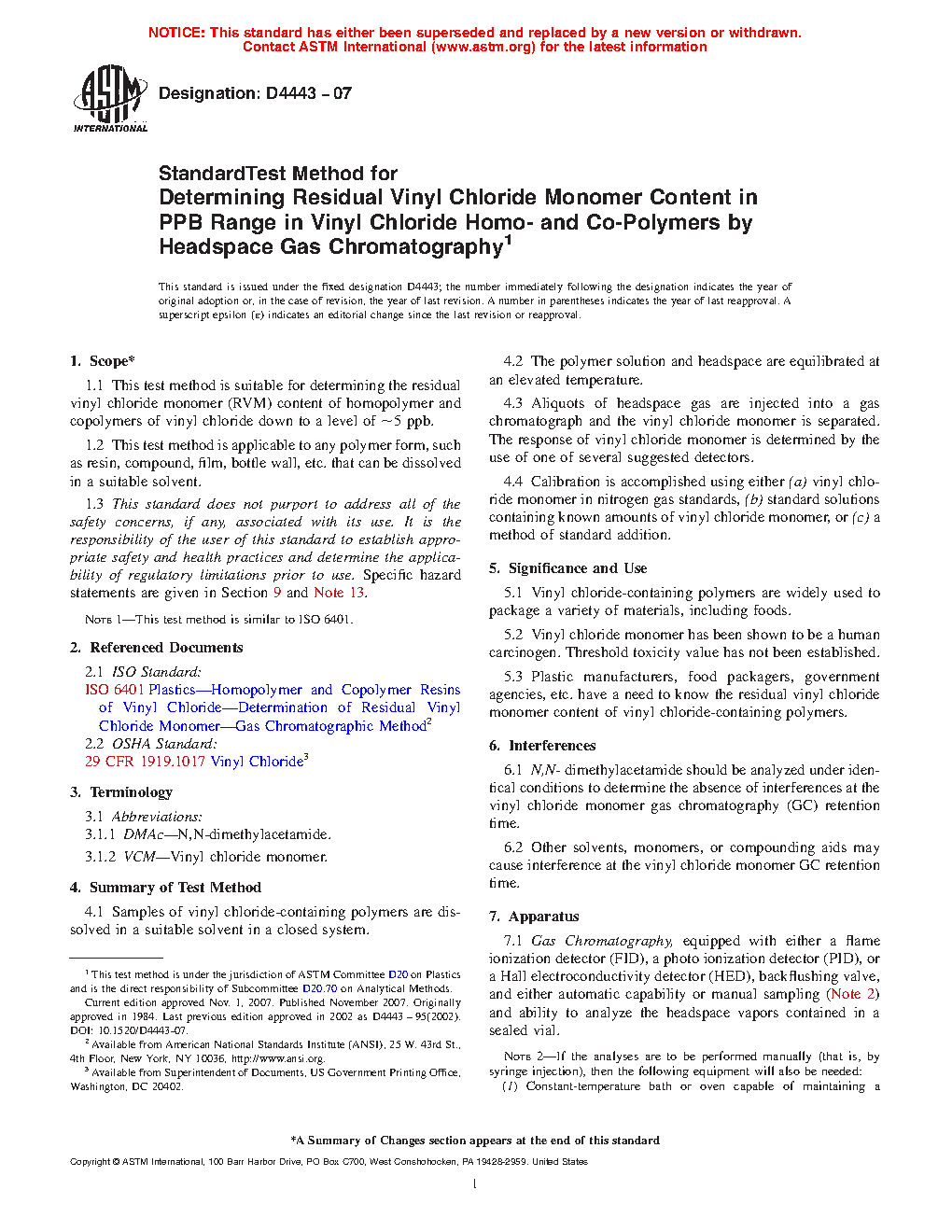
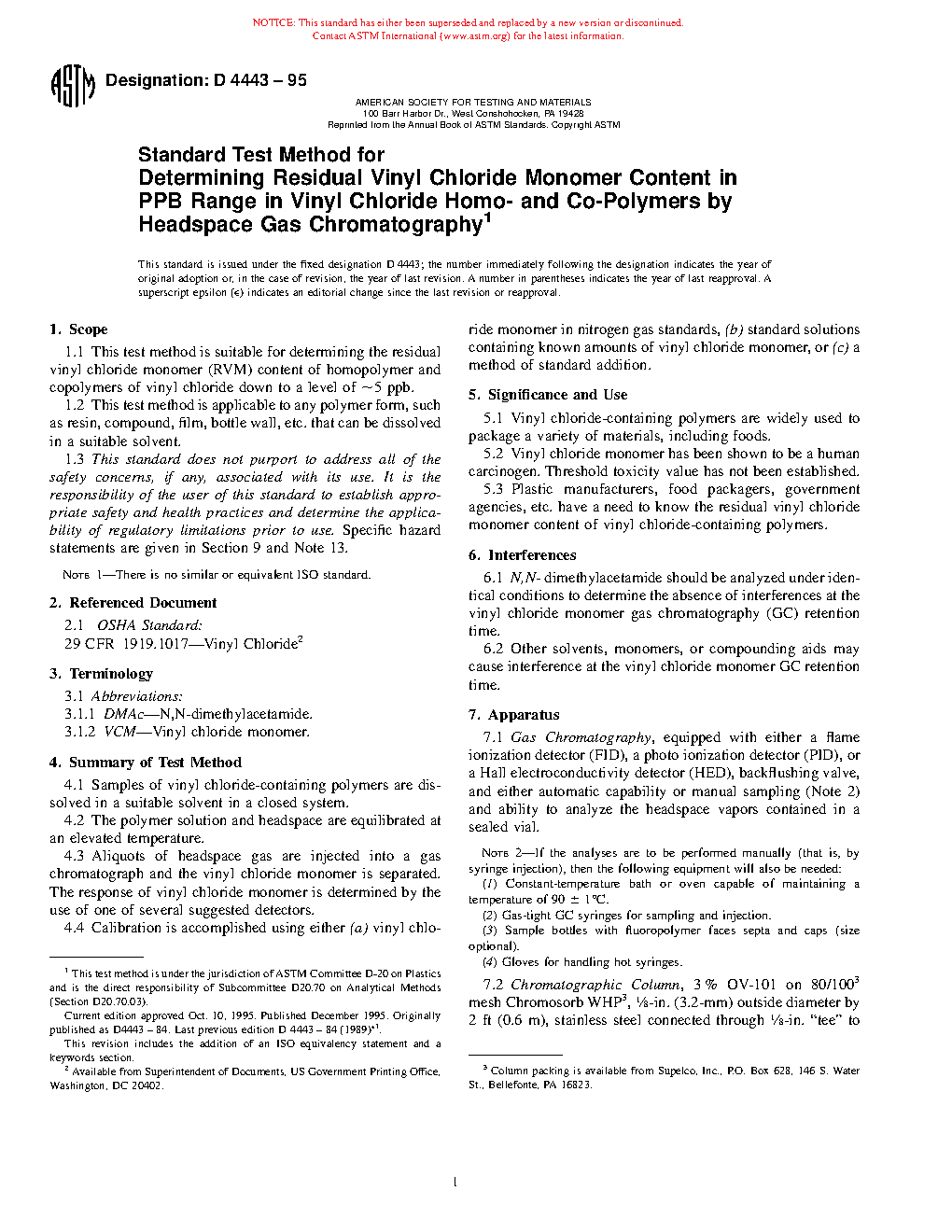
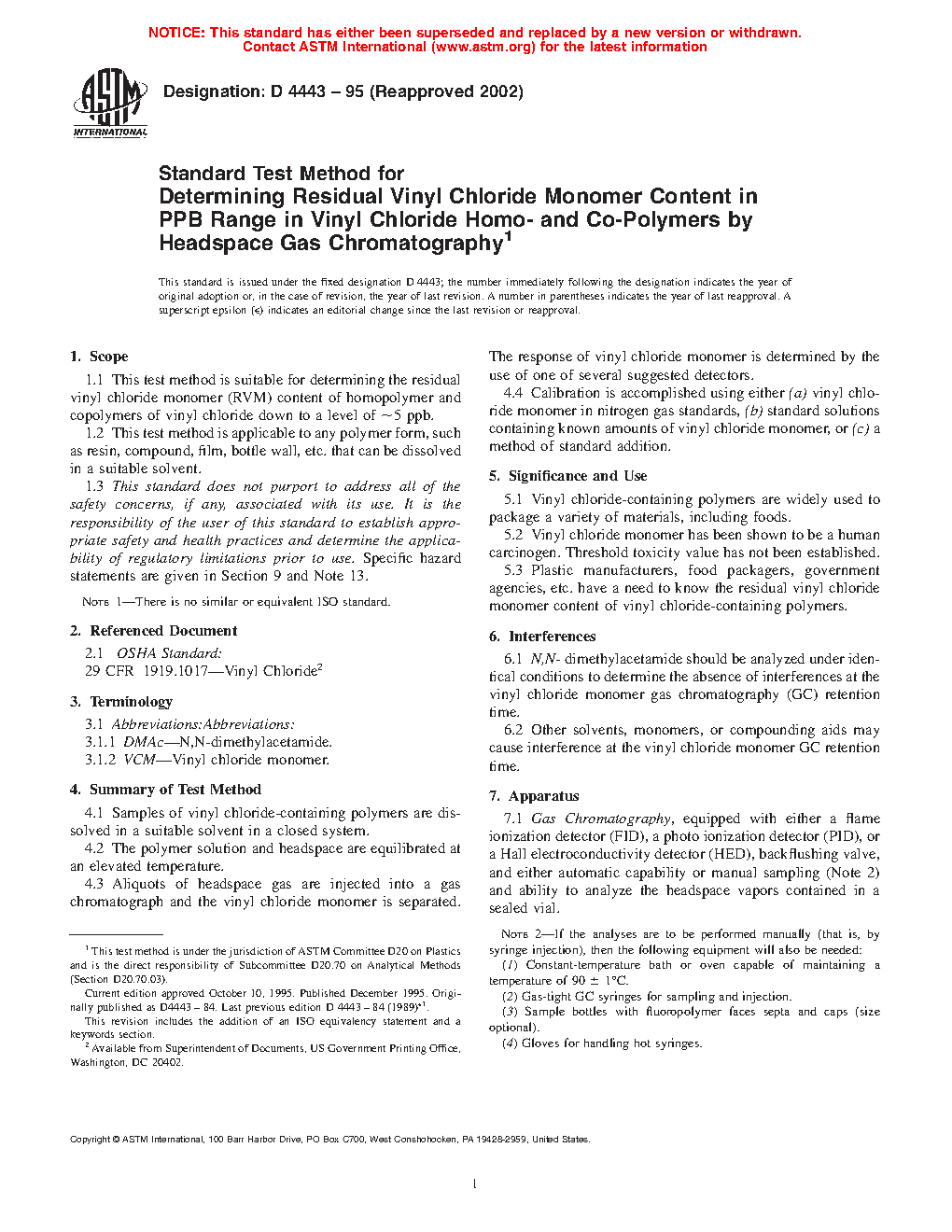
1.1 This test method is suitable for determining the residual vinyl chloride monomer (RVM) content of homopolymer and copolymers of vinyl chloride down to a level of 5 ppb.
1.2 This test method is applicable to any polymer form, such as resin, compound, film, bottle wall, etc. that can be dissolved in a suitable solvent.
1.3 This standard does not purport to address all of the safety concerns, if any, associated with its use. It is the responsibility of the user of this standard to establish appropriate safety and health practices and determine the applicability of regulatory limitations prior to use. Specific hazard statements are given in Section 9 and Note 13.
Note 1—There is no similar or equivalent ISO standard.
Significance and Use:
Vinyl chloride-containing polymers are widely used to package a variety of materials, including foods.
Vinyl chloride monomer has been shown to be a human carcinogen. Threshold toxicity value has not been established.
Plastic manufacturers, food packagers, government agencies, etc. have a need to know the residual vinyl chloride monomer content of vinyl chloride-containing polymers.
Technical characteristics
| Publisher | American Society for Testing and Materials (ASTM International) |
| Publication Date | 01/01/1995 |
| Confirmation Date | 10/10/1995 |
| Collection | |
| Page Count | 4 |
| Themes | Thermoplastic materials |
| EAN | --- |
| ISBN | --- |
| Weight (in grams) | --- |
Replaces
Previous versions