ASTM D4891-25
 Preview
Summary
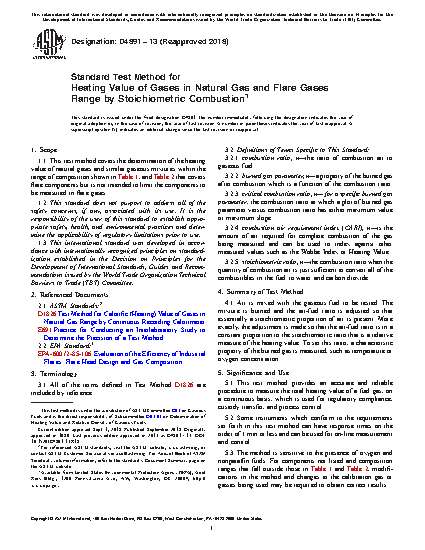
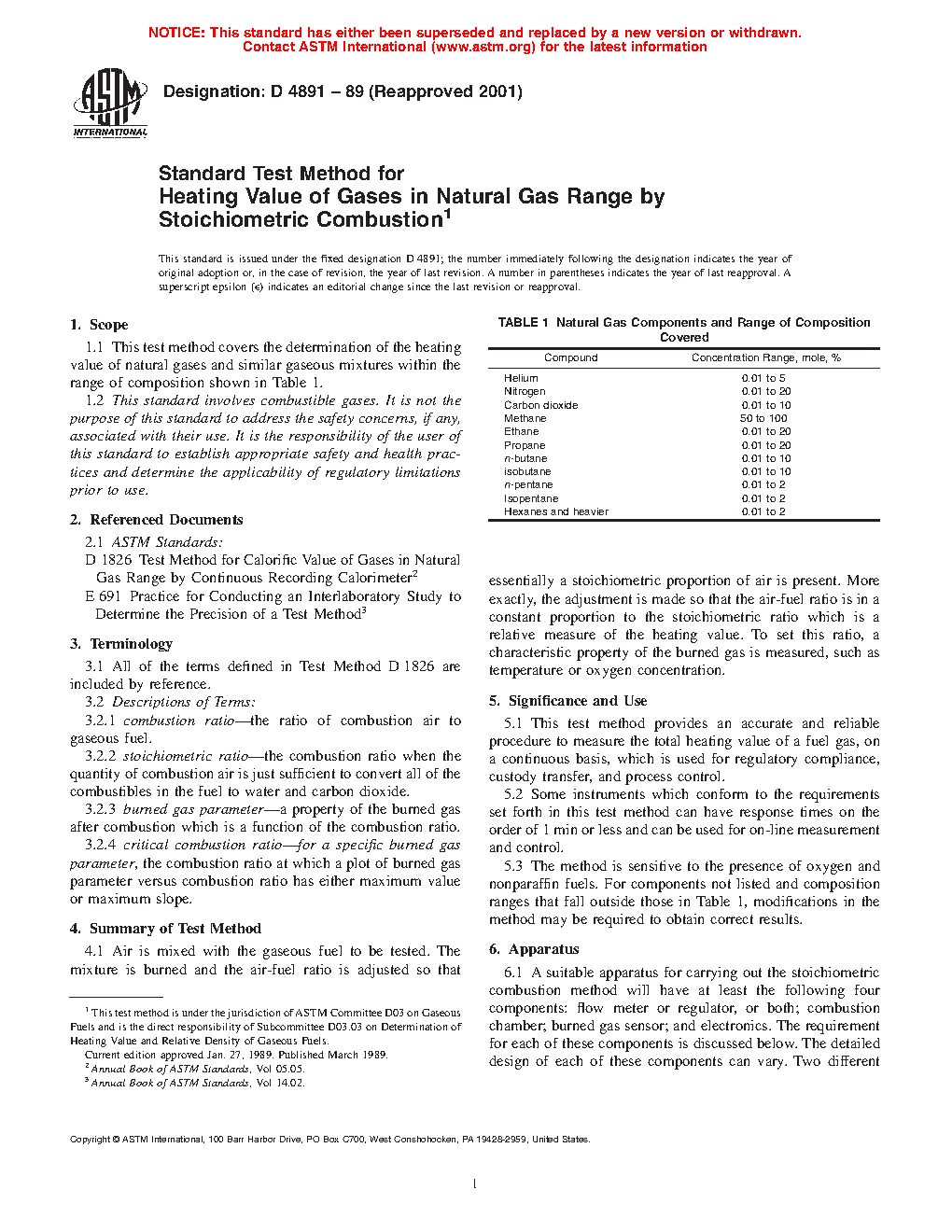
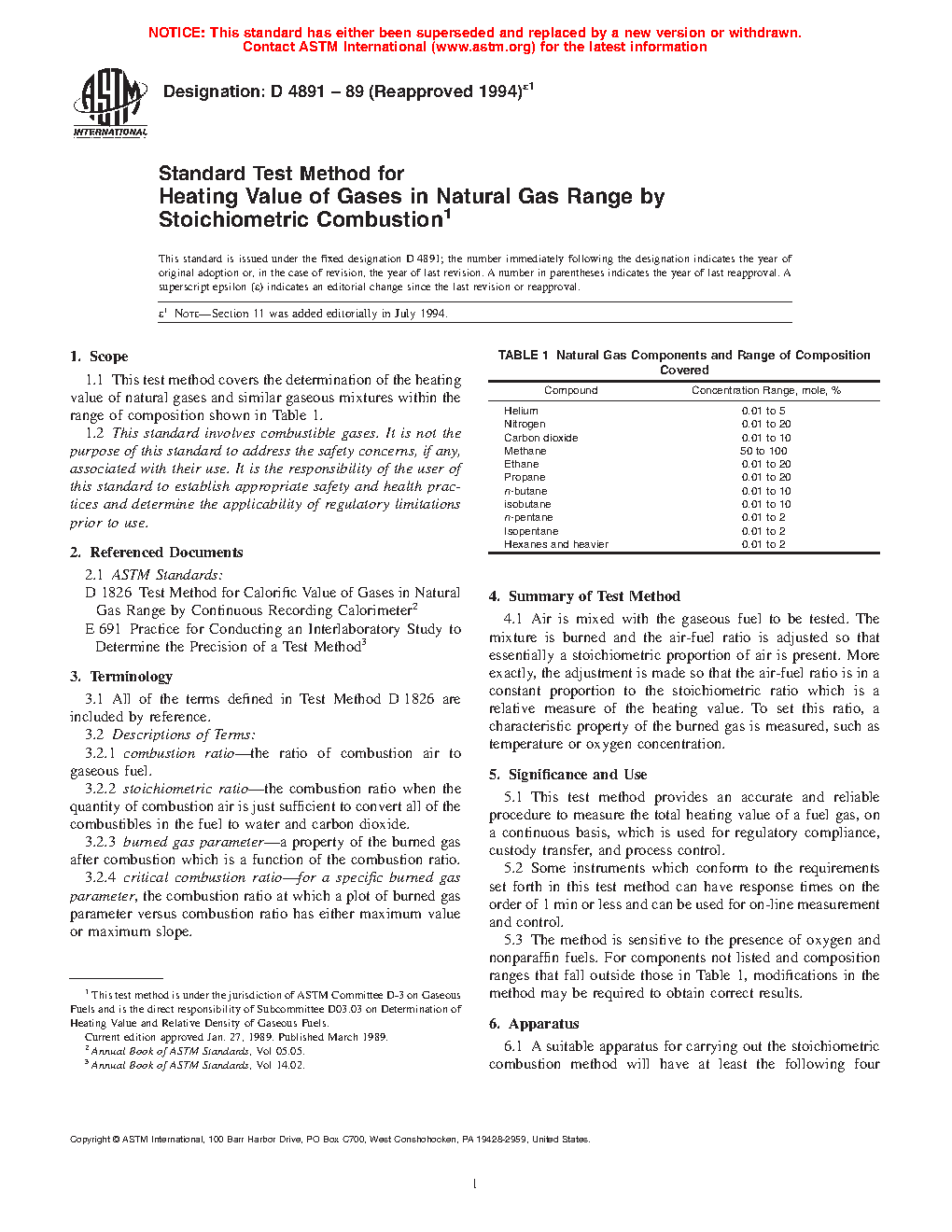
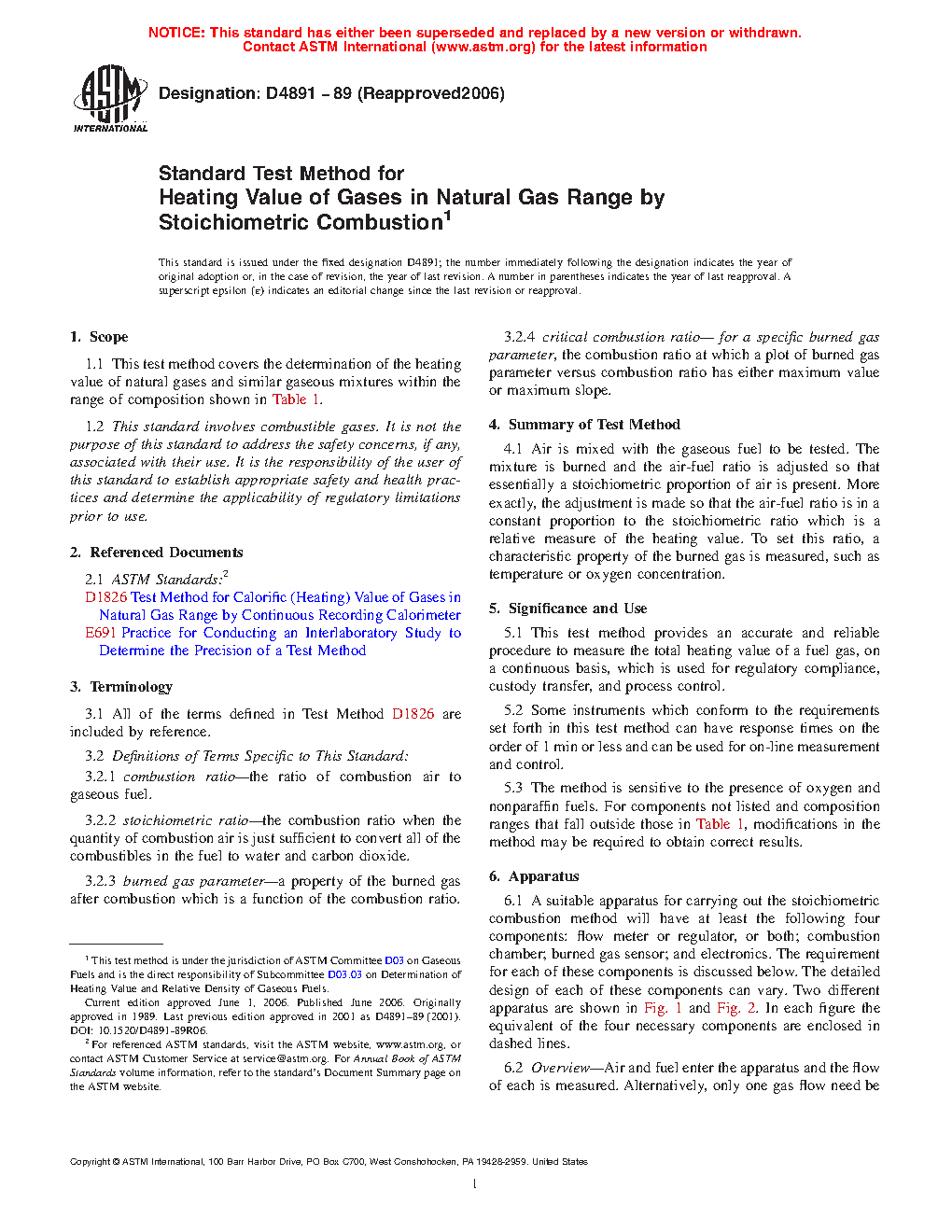
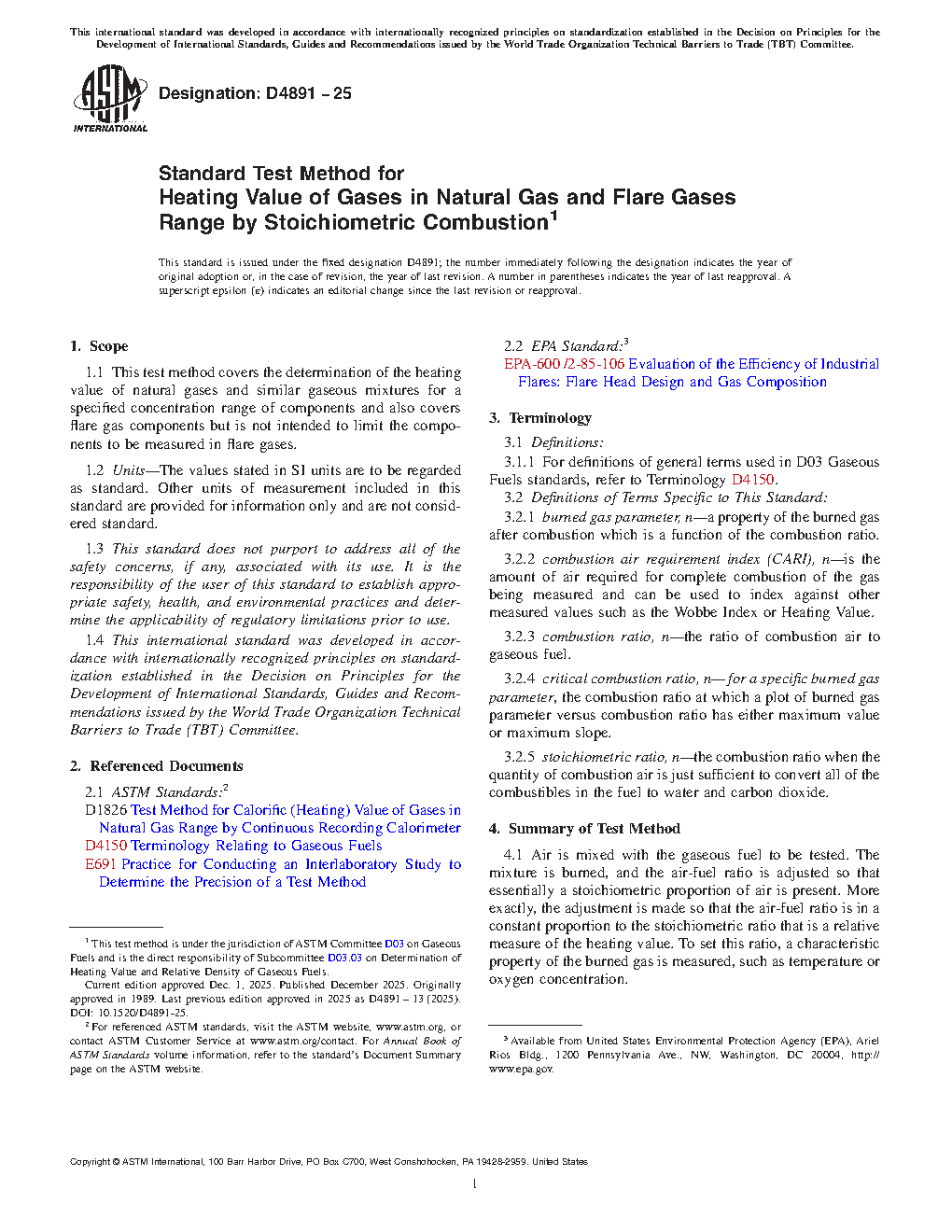
1.1 This test method covers the determination of the heating value of natural gases and similar gaseous mixtures for a specified concentration range of components and also covers flare gas components but is not intended to limit the components to be measured in flare gases.
1.2 Units—The values stated in SI units are to be regarded as standard. Other units of measurement included in this standard are provided for information only and are not considered standard.
1.3 This standard does not purport to address all of the safety concerns, if any, associated with its use. It is the responsibility of the user of this standard to establish appropriate safety, health, and environmental practices and determine the applicability of regulatory limitations prior to use.
1.4 This international standard was developed in accordance with internationally recognized principles on standardization established in the Decision on Principles for the Development of International Standards, Guides and Recommendations issued by the World Trade Organization Technical Barriers to Trade (TBT) Committee.
Significance and Use:
5.1 This test method provides an accurate and reliable procedure to measure the total heating value of a fuel gas, on a continuous basis, which is used for regulatory compliance, custody transfer, and process control.
5.2 Some instruments which conform to the requirements set forth in this test method can have response times on the order of 1 min or less and can be used for on-line measurement and control.
5.3 The method is sensitive to the presence of oxygen and nonparaffin fuels. For components not listed and composition ranges that fall outside those in Table 1 and Table 2, modifications in the method and changes to the calibration gas or gasses being used may be required to obtain correct results.
Technical characteristics
| Publisher | American Society for Testing and Materials (ASTM International) |
| Publication Date | 12/01/2025 |
| Collection | |
| Page Count | 6 |
| Themes | Gaseous fuels |
| EAN | --- |
| ISBN | --- |
| Weight (in grams) | --- |
Replaces
Previous versions