ASTM D5926-09
 Preview
Summary
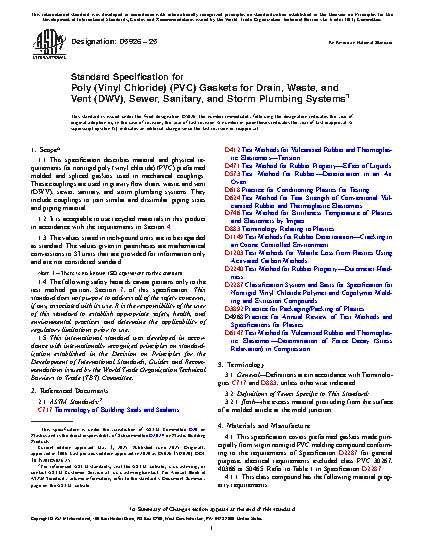
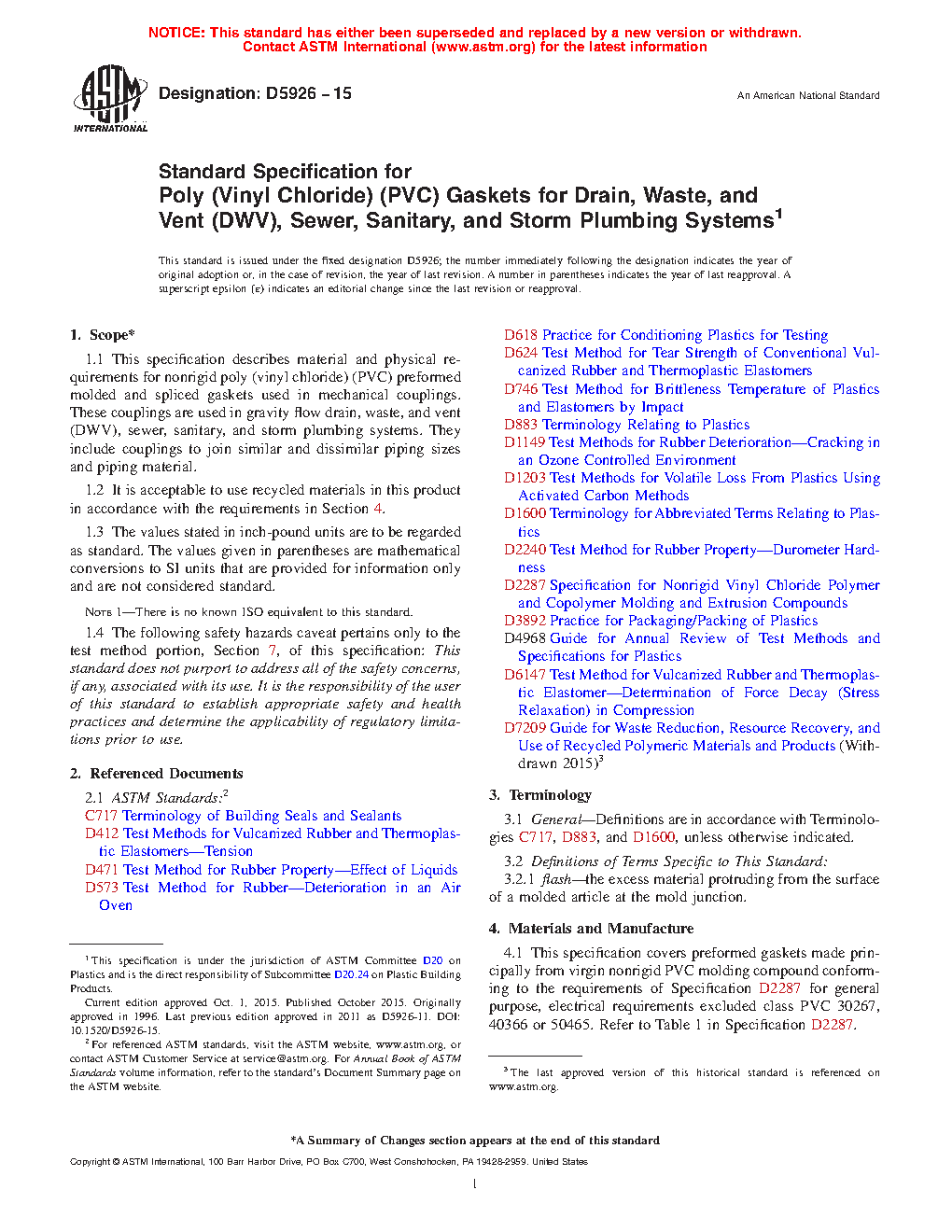
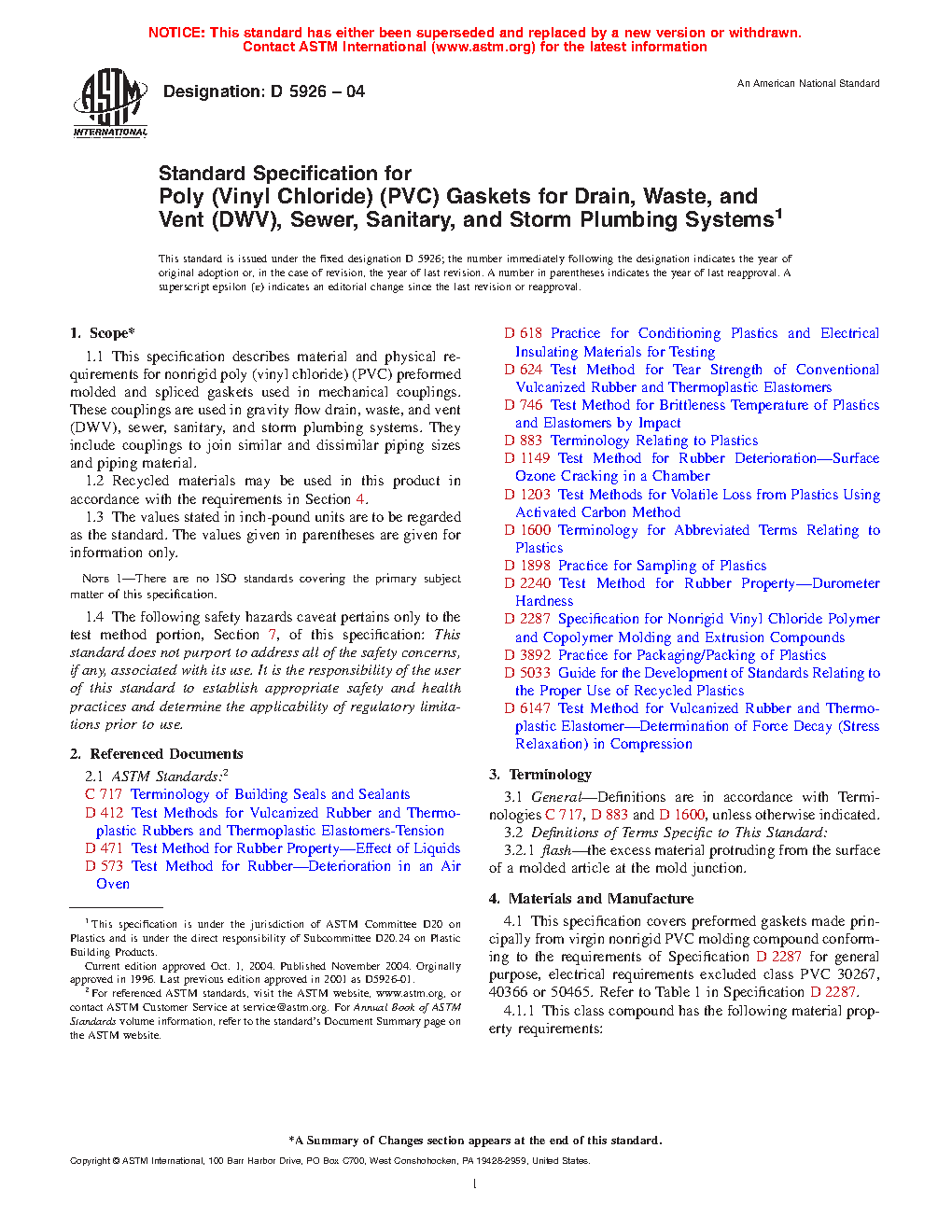
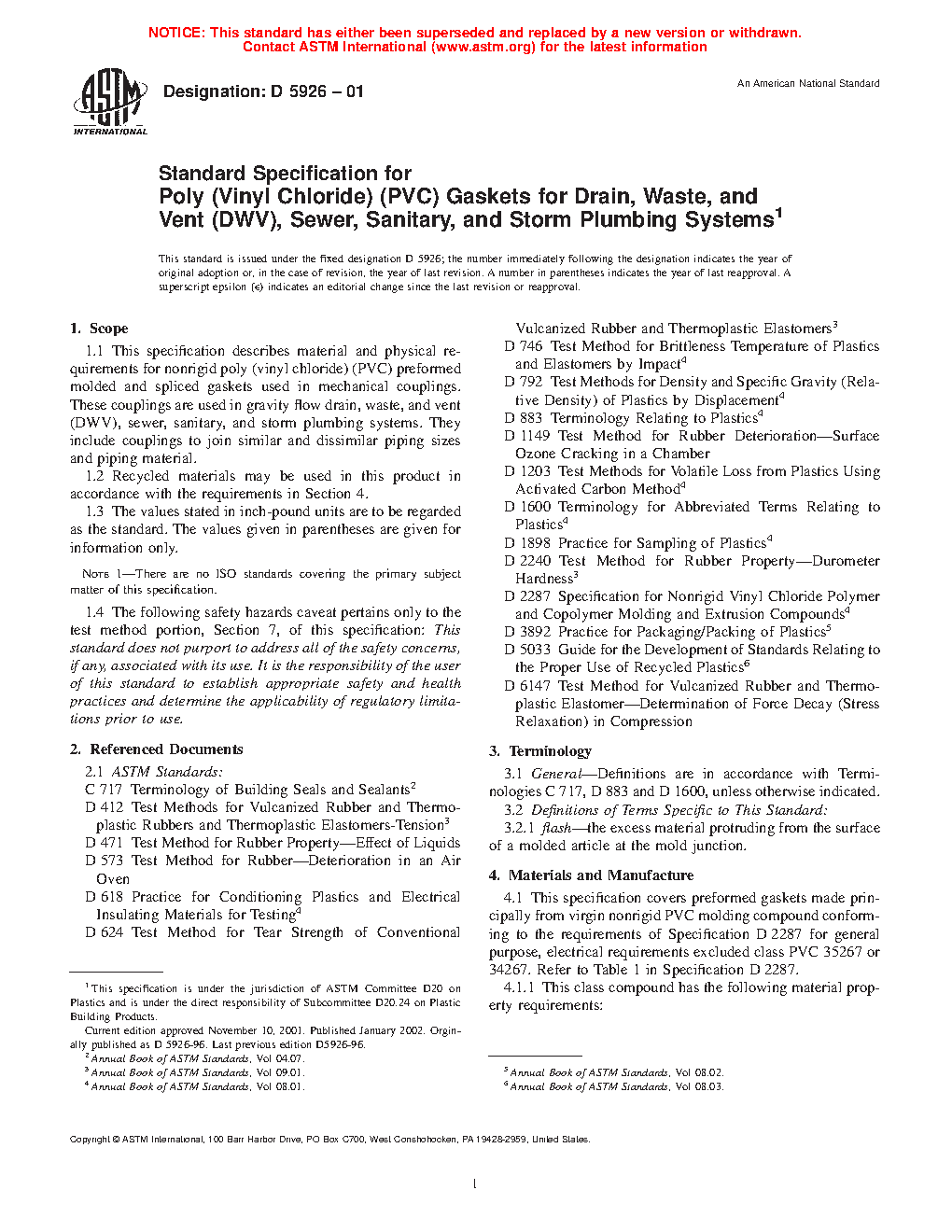
1.1 This specification describes material and physical requirements for nonrigid poly (vinyl chloride) (PVC) preformed molded and spliced gaskets used in mechanical couplings. These couplings are used in gravity flow drain, waste, and vent (DWV), sewer, sanitary, and storm plumbing systems. They include couplings to join similar and dissimilar piping sizes and piping material.
1.2 Recycled materials may be used in this product in accordance with the requirements in Section 4.
1.3 The values stated in inch-pound units are to be regarded as standard. The values given in parentheses are mathematical conversions to SI units that are provided for information only and are not considered standard.
Note 1—There is no known ISO equivalent to this standard.
1.4 The following safety hazards caveat pertains only to the test method portion, Section 7, of this specification: This standard does not purport to address all of the safety concerns, if any, associated with its use. It is the responsibility of the user of this standard to establish appropriate safety and health practices and determine the applicability of regulatory limitations prior to use.
Rationale:
This specification describes material and physical requirements for virgin nonrigid poly(vinyl chloride) (PVC) preformed molded and spliced gaskets used in mechanical couplings for gravity flow drain, waste, and vent (DWV), sewer, sanitary, and storm plumbing systems. They include couplings that join similar and dissimilar piping sizes and piping materials. Recycled materials may also be used in this product. Properly sampled specimens shall undergo tests, and shall conform accordingly to the following property requirements: durometer hardness; tensile strength; volatile loss; brittleness temperature; hardness increase, loss in tensile strength, and loss in elongation after heat aging; water absorption and weight increase; cracks and ozone resistance; volume increase and decrease after oil immersion; stress relaxation; and force retention.
Technical characteristics
| Publisher | American Society for Testing and Materials (ASTM International) |
| Publication Date | 09/01/2009 |
| Collection | |
| Page Count | 3 |
| Themes | External sewerage systems |
| EAN | --- |
| ISBN | --- |
| Weight (in grams) | --- |
Replaces
Previous versions