ASTM D803-03(2008)
 Preview
Summary
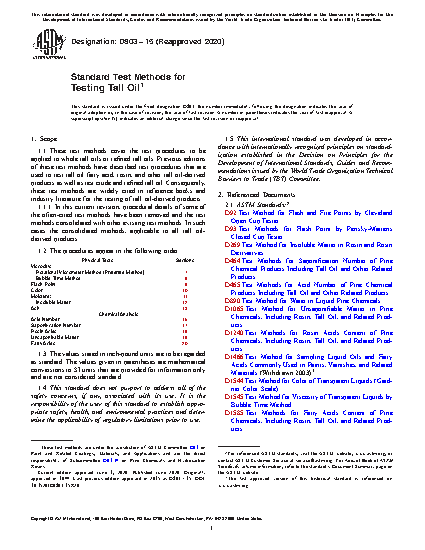
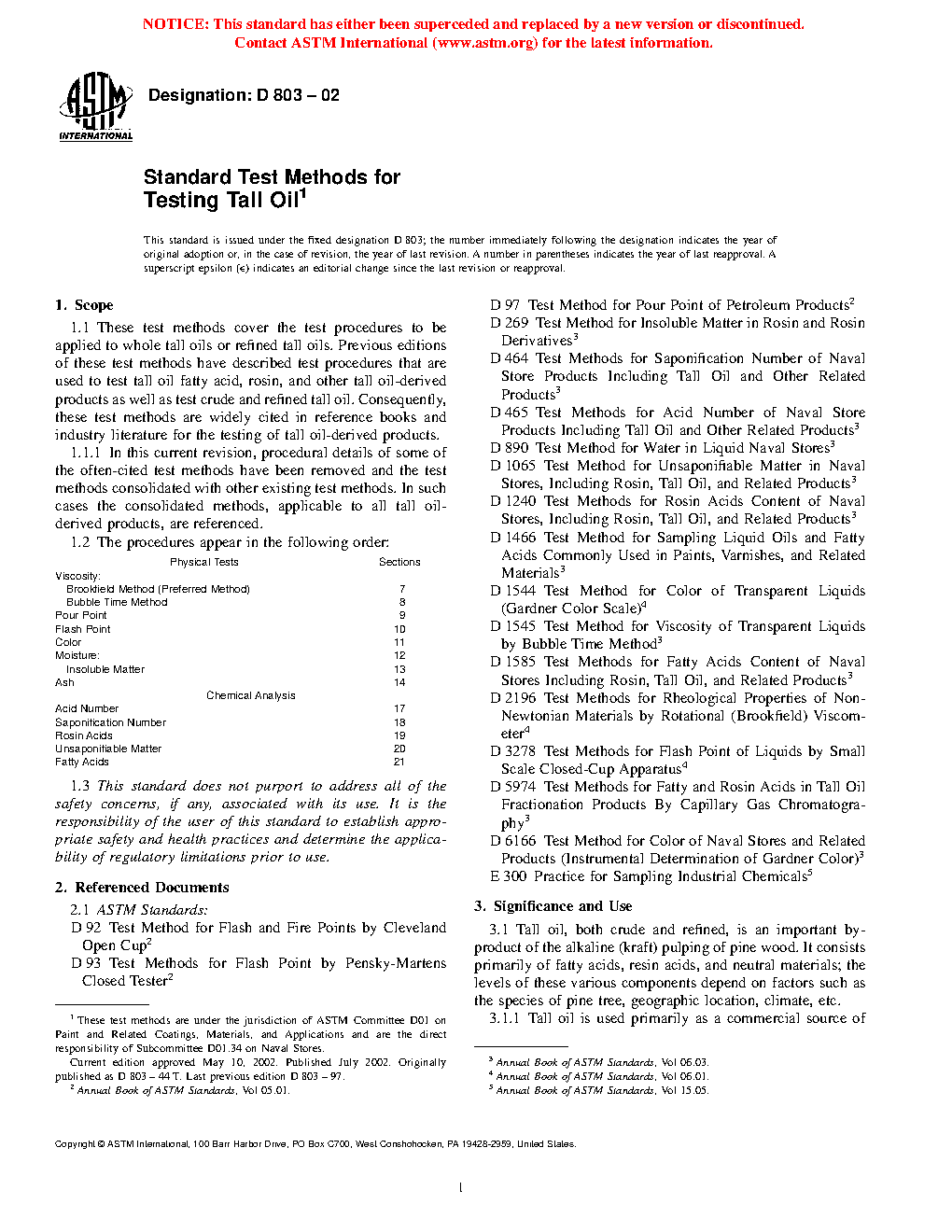
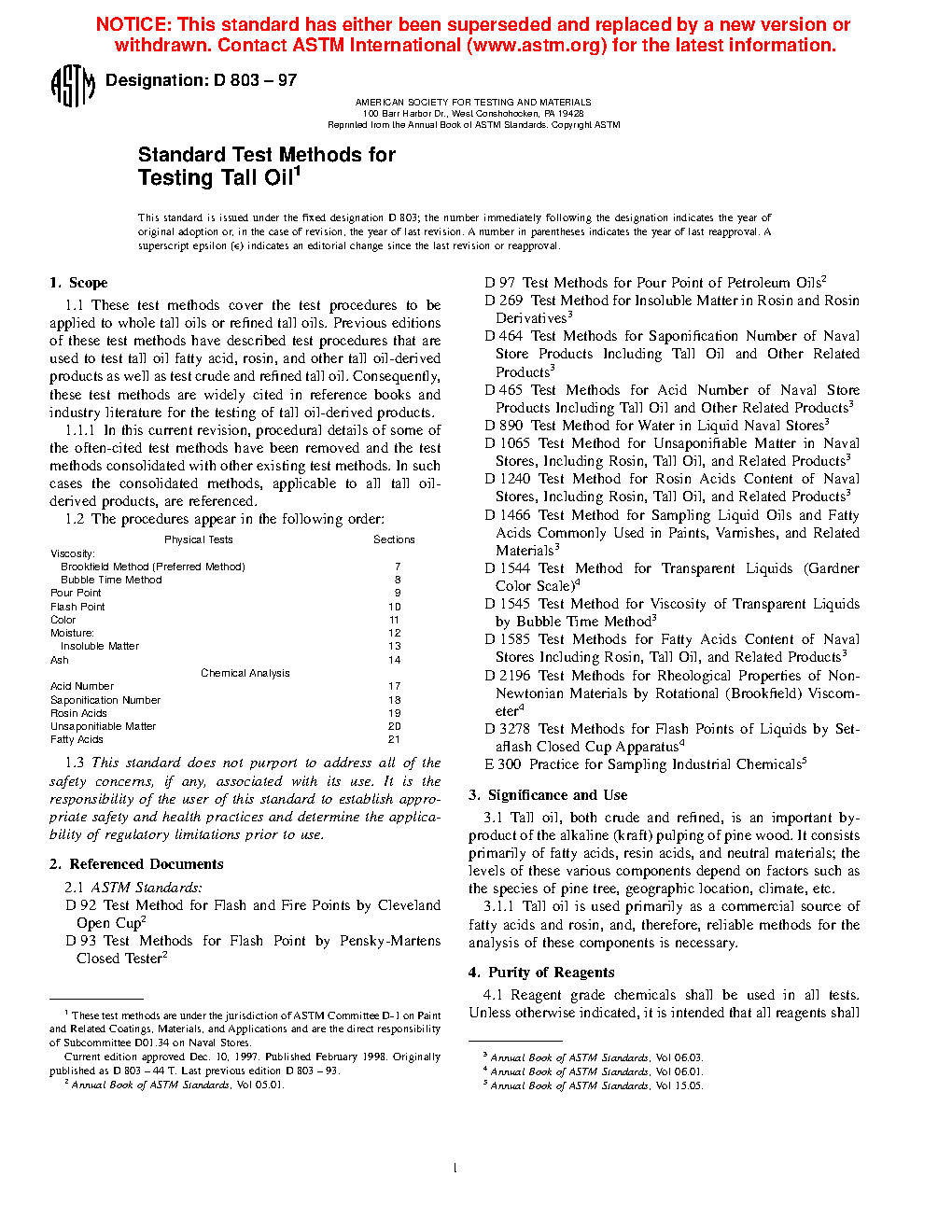
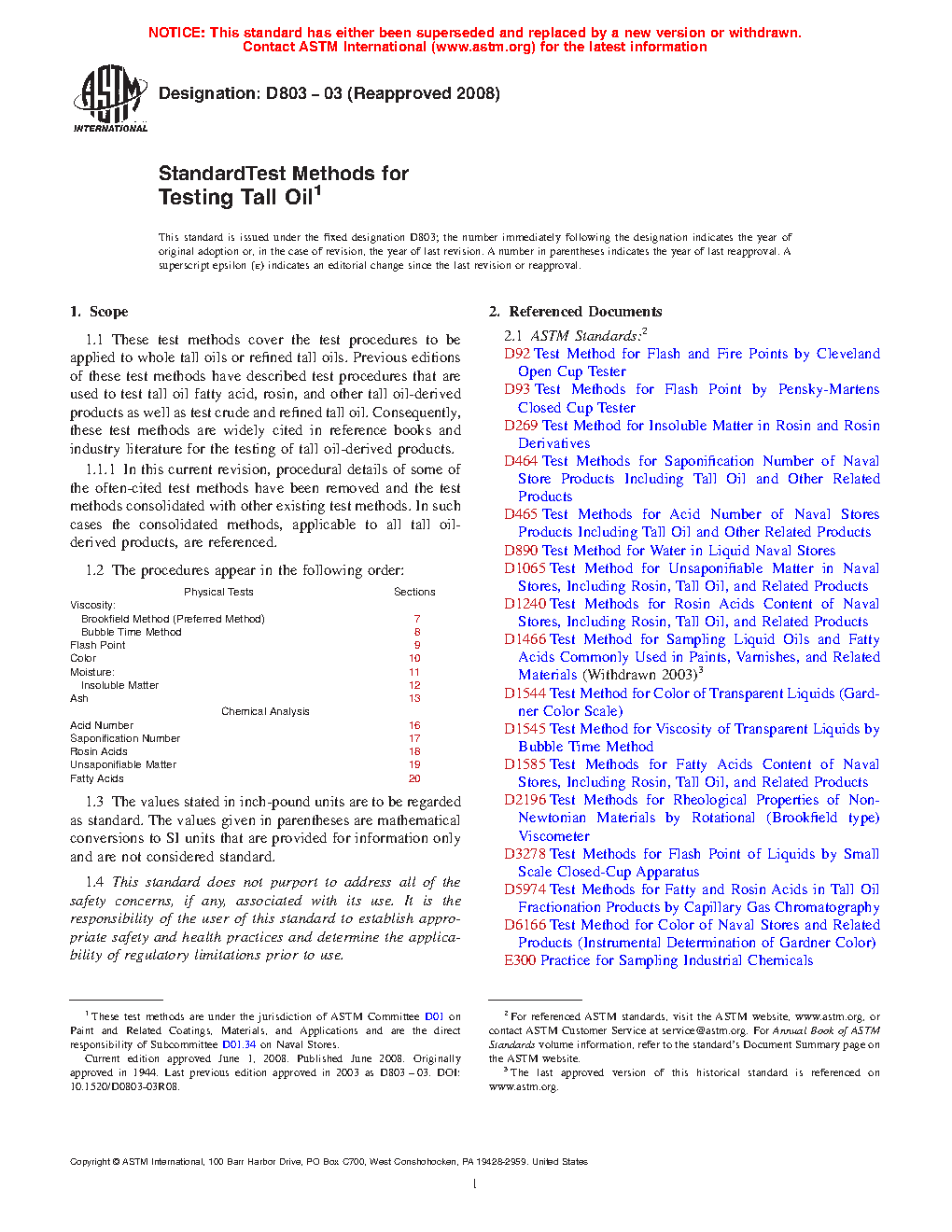
1.1 These test methods cover the test procedures to be applied to whole tall oils or refined tall oils. Previous editions of these test methods have described test procedures that are used to test tall oil fatty acid, rosin, and other tall oil-derived products as well as test crude and refined tall oil. Consequently, these test methods are widely cited in reference books and industry literature for the testing of tall oil-derived products.
1.1.1 In this current revision, procedural details of some of the often-cited test methods have been removed and the test methods consolidated with other existing test methods. In such cases the consolidated methods, applicable to all tall oil-derived products, are referenced.
1.2 The procedures appear in the following order:
| Physical Tests | Sections |
| Viscosity: | |
| Brookfield Method (Preferred Method) | 7 |
| Bubble Time Method | 8 |
| Flash Point | 9 |
| Color | 10 |
| Moisture: | 11 |
| Insoluble Matter | 12 |
| Ash | 13 |
| Chemical Analysis | |
| Acid Number | 16 |
| Saponification Number | 17 |
| Rosin Acids | 18 |
| Unsaponifiable Matter | 19 |
| Fatty Acids | 20 |
1.3 The values stated in inch-pound units are to be regarded as standard. The values given in parentheses are mathematical conversions to SI units that are provided for information only and are not considered standard.
1.4 This standard does not purport to address all of the safety concerns, if any, associated with its use. It is the responsibility of the user of this standard to establish appropriate safety and health practices and determine the applicability of regulatory limitations prior to use.
Significance and Use:
p>Tall oil, both crude and refined, is an important by-product of the alkaline (kraft) pulping of pine wood. It consists primarily of fatty acids, resin acids, and neutral materials; the levels of these various components depend on factors such as the species of pine tree, geographic location, climate, etc.
Tall oil is used primarily as a commercial source of fatty acids and rosin, and, therefore, reliable methods for the analysis of these components is necessary.
Technical characteristics
| Publisher | American Society for Testing and Materials (ASTM International) |
| Publication Date | 05/10/2003 |
| Confirmation Date | 06/01/2008 |
| Collection | |
| Page Count | 3 |
| Themes | Binders |
| EAN | --- |
| ISBN | --- |
| Weight (in grams) | --- |
Replaces

Previous versions