ASTM E180-03
 Preview
Summary
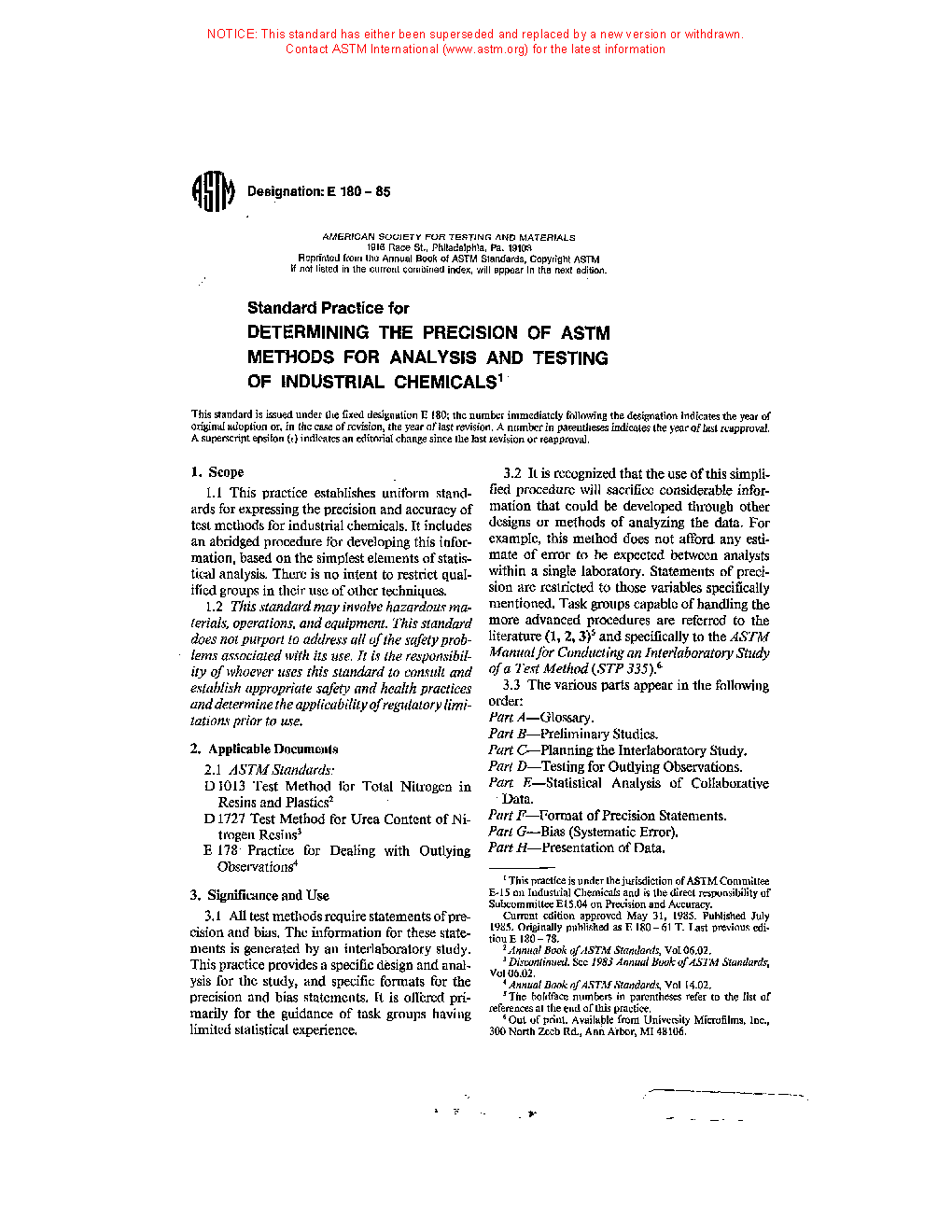
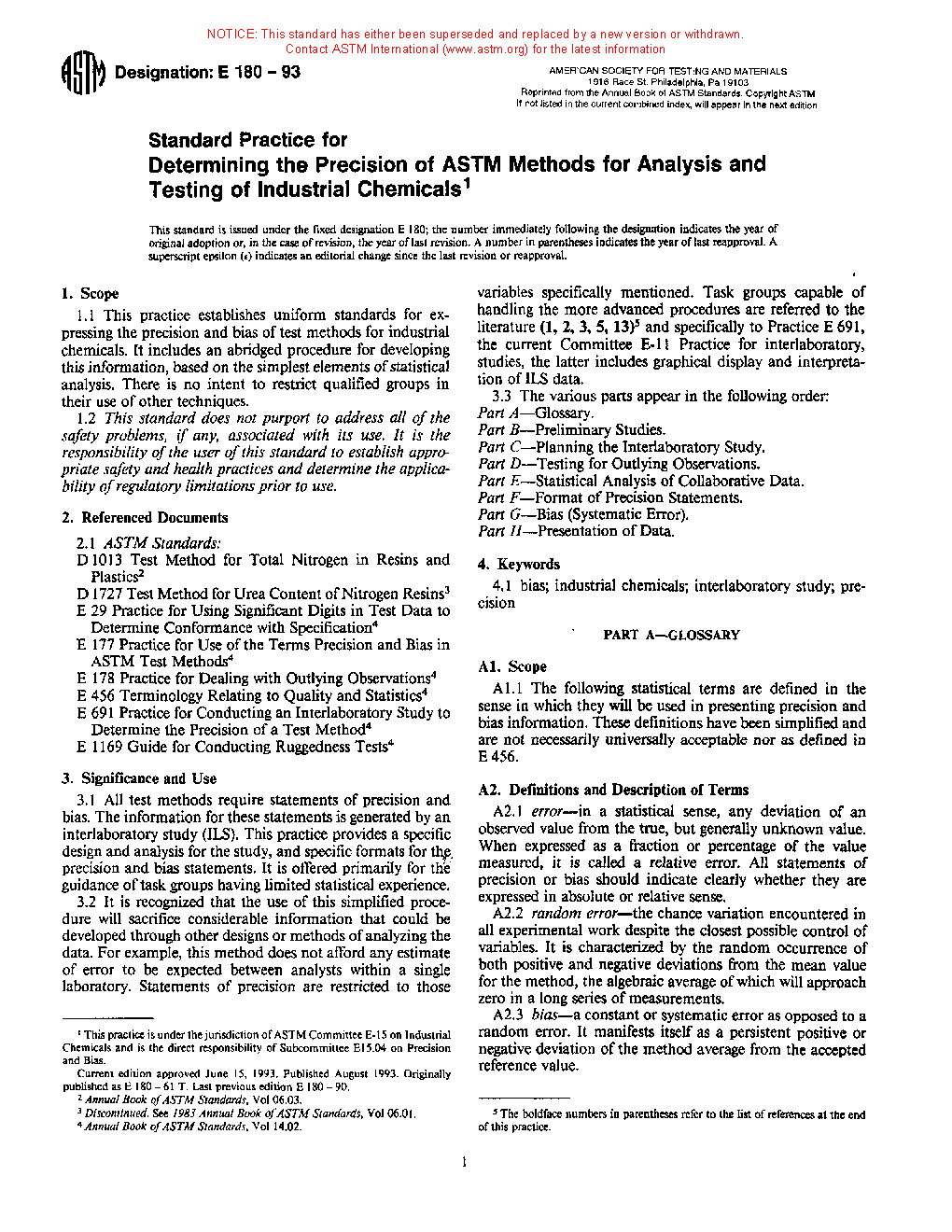
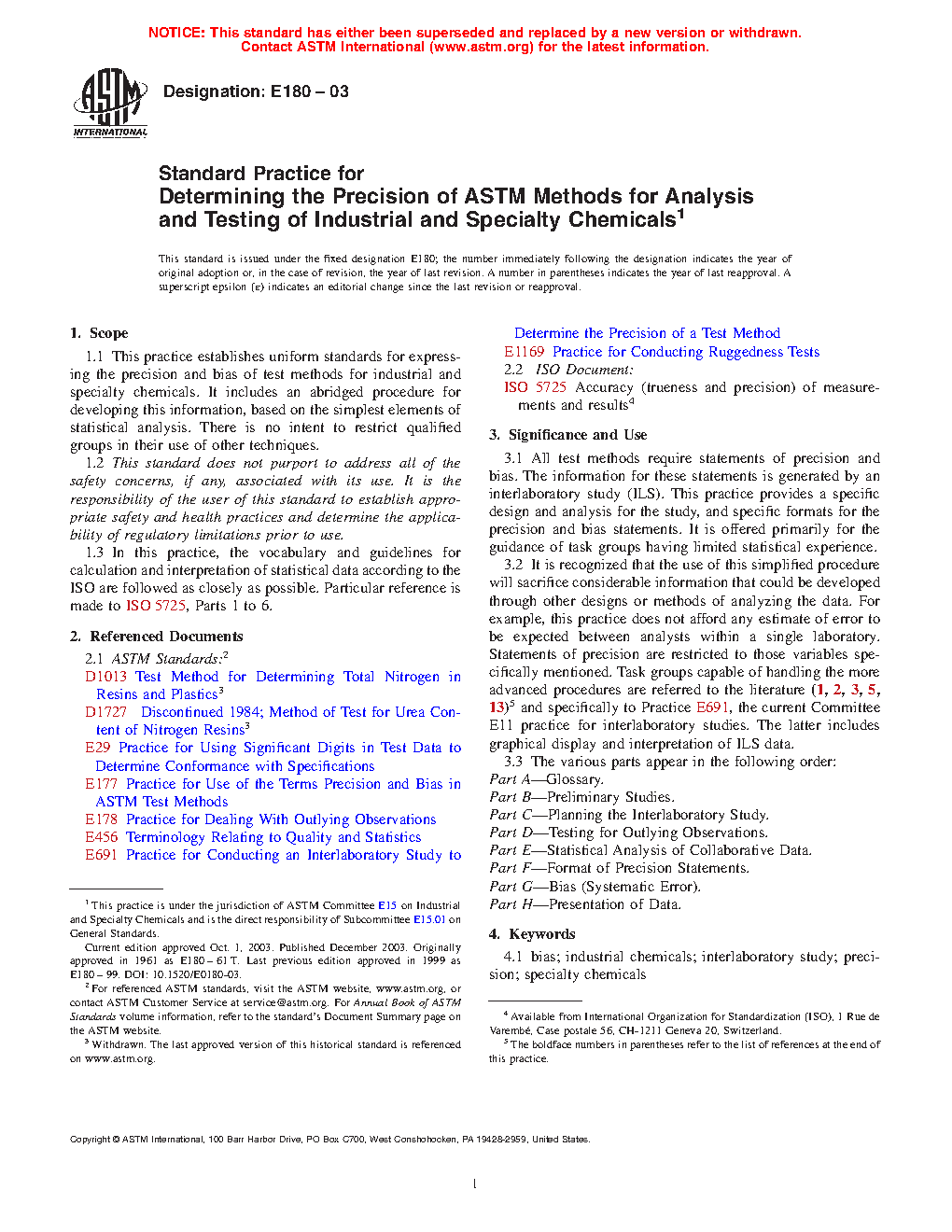
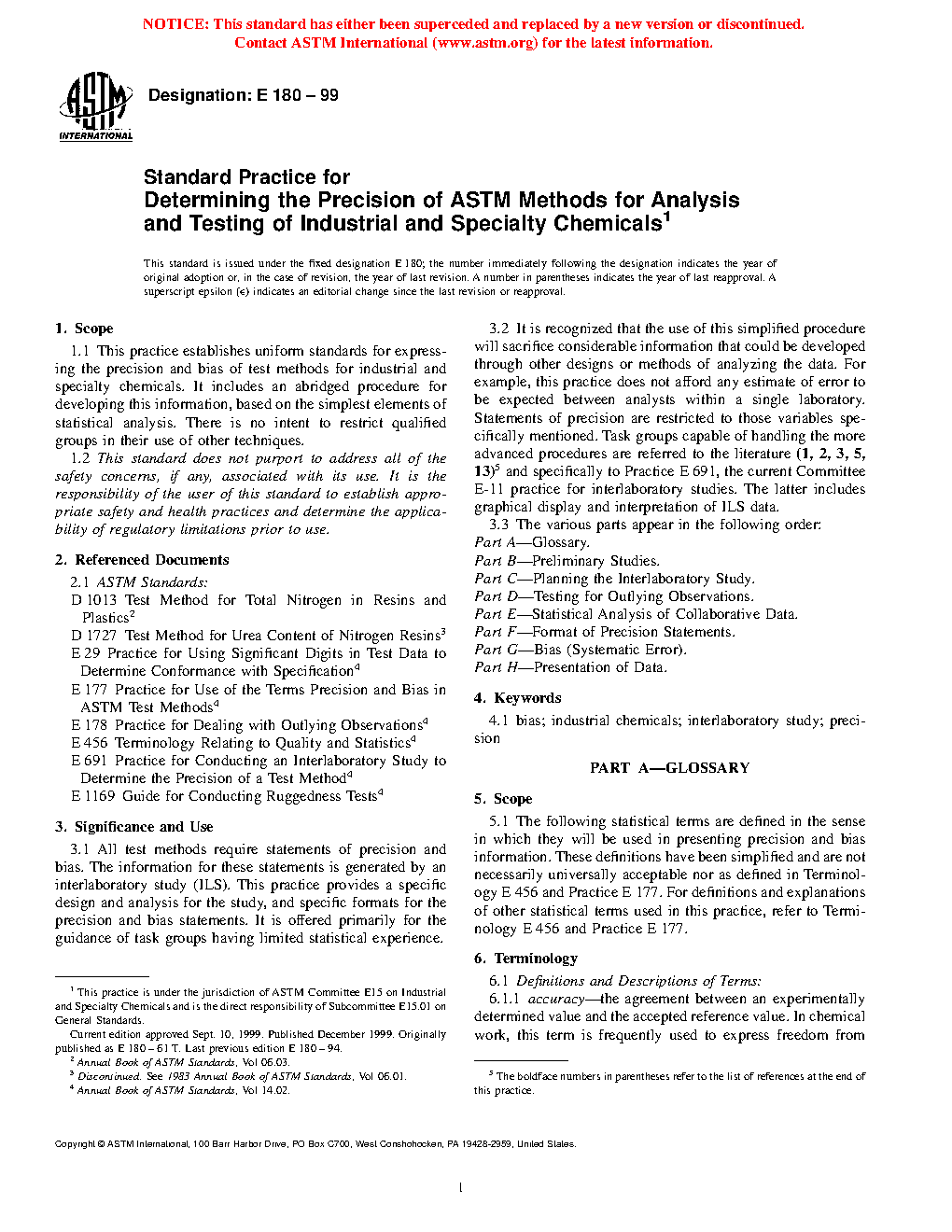
1.1 This practice establishes uniform standards for expressing the precision and bias of test methods for industrial and specialty chemicals. It includes an abridged procedure for developing this information, based on the simplest elements of statistical analysis. There is no intent to restrict qualified groups in their use of other techniques.
1.2 This standard does not purport to address all of the safety concerns, if any, associated with its use. It is the responsibility of the user of this standard to establish appropriate safety and health practices and determine the applicability of regulatory limitations prior to use.
1.3 In this practice, the vocabulary and guidelines for calculation and interpretation of statistical data according to the ISO are followed as closely as possible. Particular reference is made to ISO 5725, Parts 1 to 6.
Significance and Use:
All test methods require statements of precision and bias. The information for these statements is generated by an interlaboratory study (ILS). This practice provides a specific design and analysis for the study, and specific formats for the precision and bias statements. It is offered primarily for the guidance of task groups having limited statistical experience.
It is recognized that the use of this simplified procedure will sacrifice considerable information that could be developed through other designs or methods of analyzing the data. For example, this practice does not afford any estimate of error to be expected between analysts within a single laboratory. Statements of precision are restricted to those variables specifically mentioned. Task groups capable of handling the more advanced procedures are referred to the literature (1, 2, 3, 5, 13)4 and specifically to Practice E 691
The various parts appear in the following order:
Part A—Glossary.
Part B—Preliminary Studies.
Part C—Planning the Interlaboratory Study.
Part D—Testing for Outlying Observations.
Part E—Statistical Analysis of Collaborative Data.
Part F—Format of Precision Statements.
Part G—Bias (Systematic Error).
Part H—Presentation of Data.
Technical characteristics
| Publisher | American Society for Testing and Materials (ASTM International) |
| Publication Date | 10/01/2003 |
| Cancellation Date | 10/01/2009 |
| Collection | |
| Page Count | 14 |
| Themes | Organic chemicals in general |
| EAN | --- |
| ISBN | --- |
| Weight (in grams) | --- |
Replaces
Previous versions