
Superseded
Standard
Historical
DIN EN ISO 16256:2013-04
Clinical laboratory testing and in vitro diagnostic test systems - Reference method for testing the in vitro activity of antimicrobial agents against yeast of fungi involved in infectious diseases (ISO 16256:2012); German version EN ISO 16256:2012
 Preview
Summary
This document describes a method for testing the susceptibility to antifungal agents of yeasts, including Candida spp. and Cryptococcus neoformans, that cause infections. The reference method described here has not been used in studies of the yeast forms of dimorphic fungi, such as B. dermatitidis and/or H. capsulatum variety capsulatum. Moreover, testing filamentous fungi (moulds) introduces several additional problems in standardization not addressed by the current procedure. Reference methods for broth dilution antifungal susceptibility testing of filamentous fungi has been developed and are now available as CLSI document M38 and EUCAST document E.DEF 9.1. This part of ISO 16256 describes the broth microdilution reference method which can be implemented by either of two pathways. One pathway involves visual determination of MICs (CLSI method) [1], the 2nd pathway involves spectrophotometric determination of MICs (EUCAST method) [2]. The MIC reflects the activity of the drug under the described test conditions, and can be interpreted for clinical management purposes by taking into account other factors, such as drug pharmacology or antifungal resistance mechanisms. MICs can be categorized as susceptible (S), susceptible dose-dependent (S-DD), intermediate (I), non-susceptible (NS), or resistant (R). In addition, MIC distributions can be used to define wild type or non-wild type fungal populations. Clinical interpretation of the MIC value is beyond the scope of this part of ISO 16256, Interpretive category breakpoints specific to the CLSI- and EUCAST-derived methods can be found by consulting the latest interpretive tables provided by the organizations. It is advisable to compare routine susceptibility testing methods or diagnostic test devices with this reference method in order to ensure comparable and reliable results for validation or registration purposes.
Technical characteristics
| Publisher | Deutsche Institut für Normung e.V. (DIN) |
| Publication Date | 04/01/2013 |
| Page Count | 25 |
| EAN | --- |
| ISBN | --- |
| Weight (in grams) | --- |
No products.
Previous versions
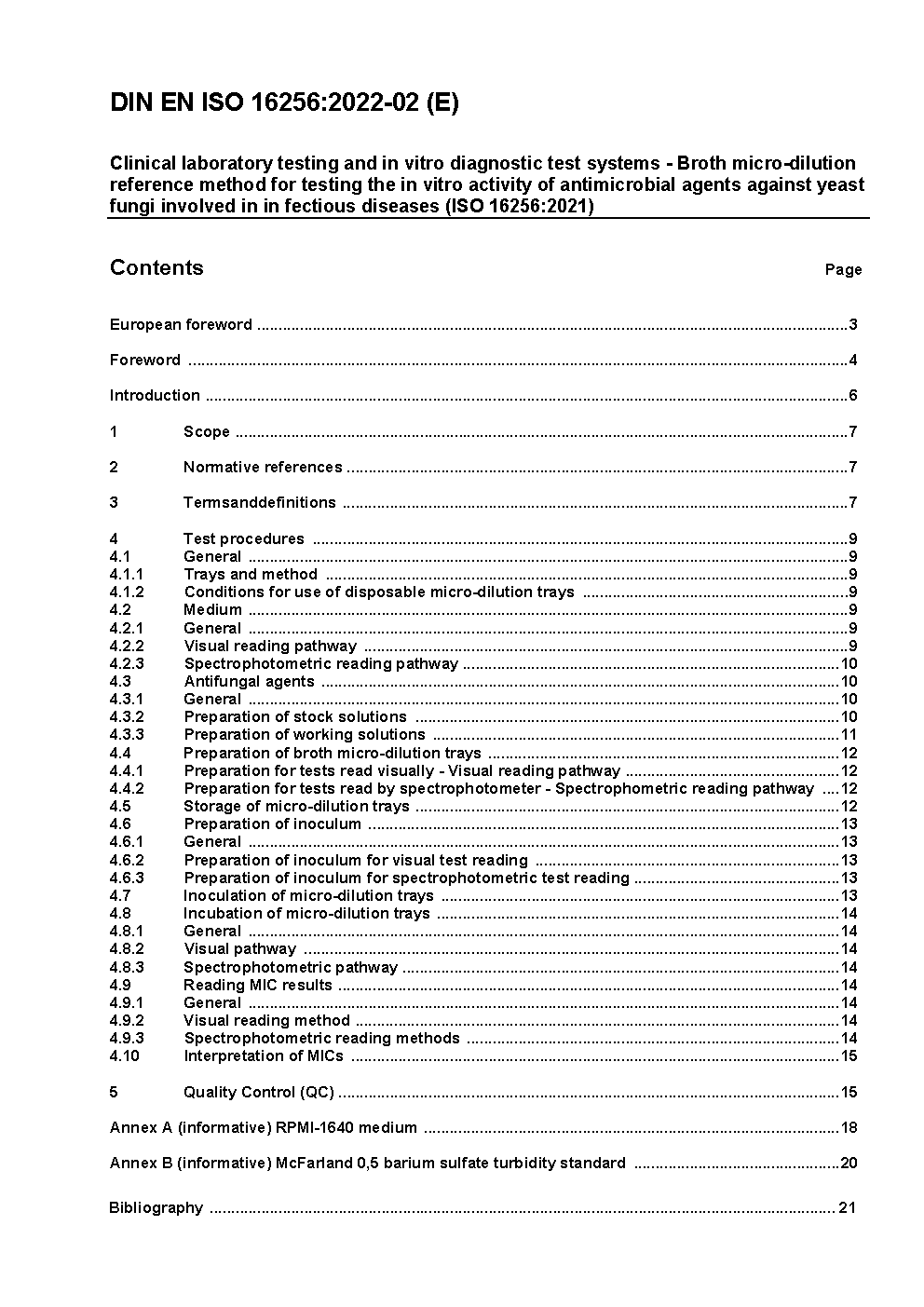
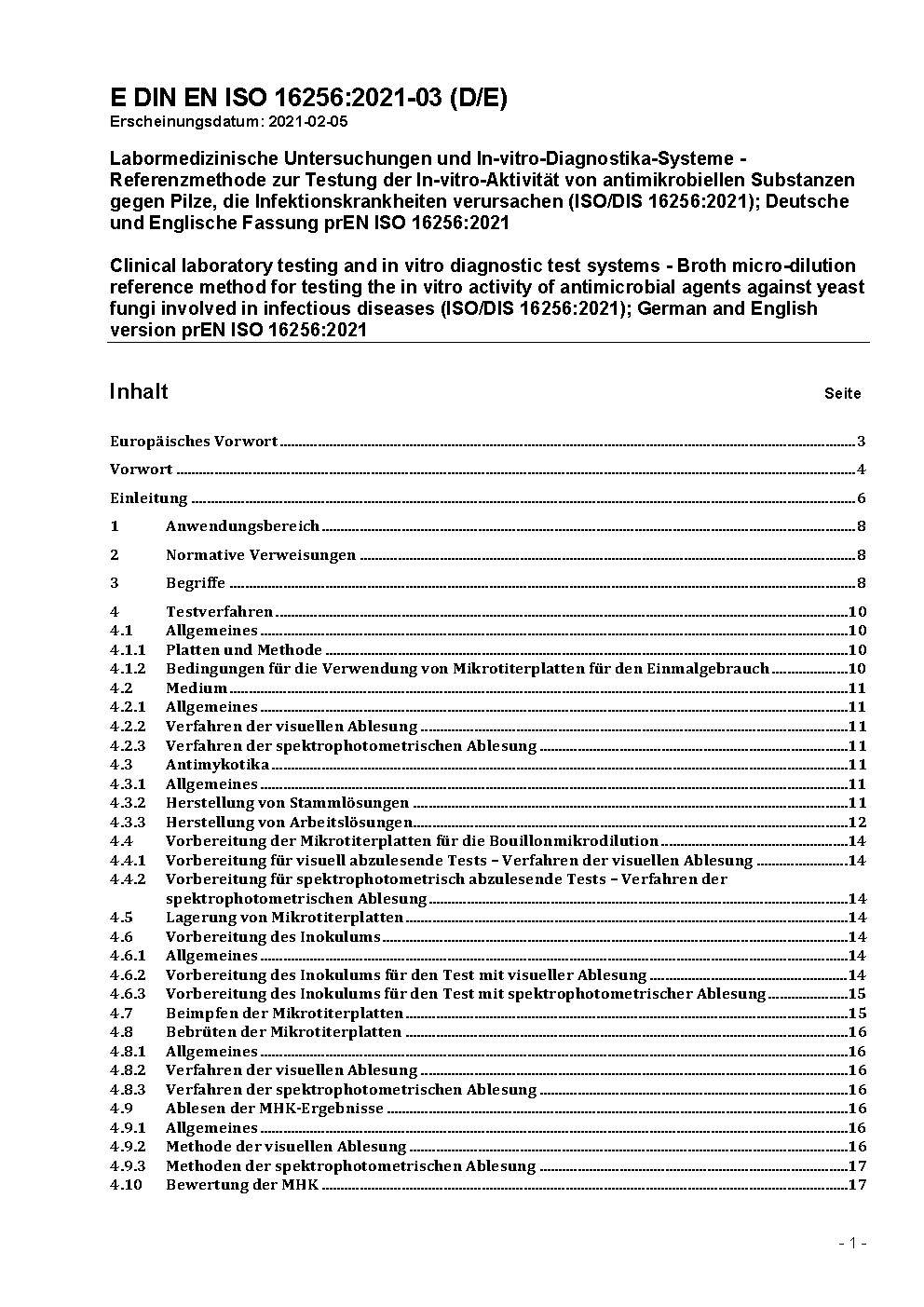
01/04/2013
Superseded
Historical

01/09/2011
Superseded
Historical