Superseded
Draft standard
Historical
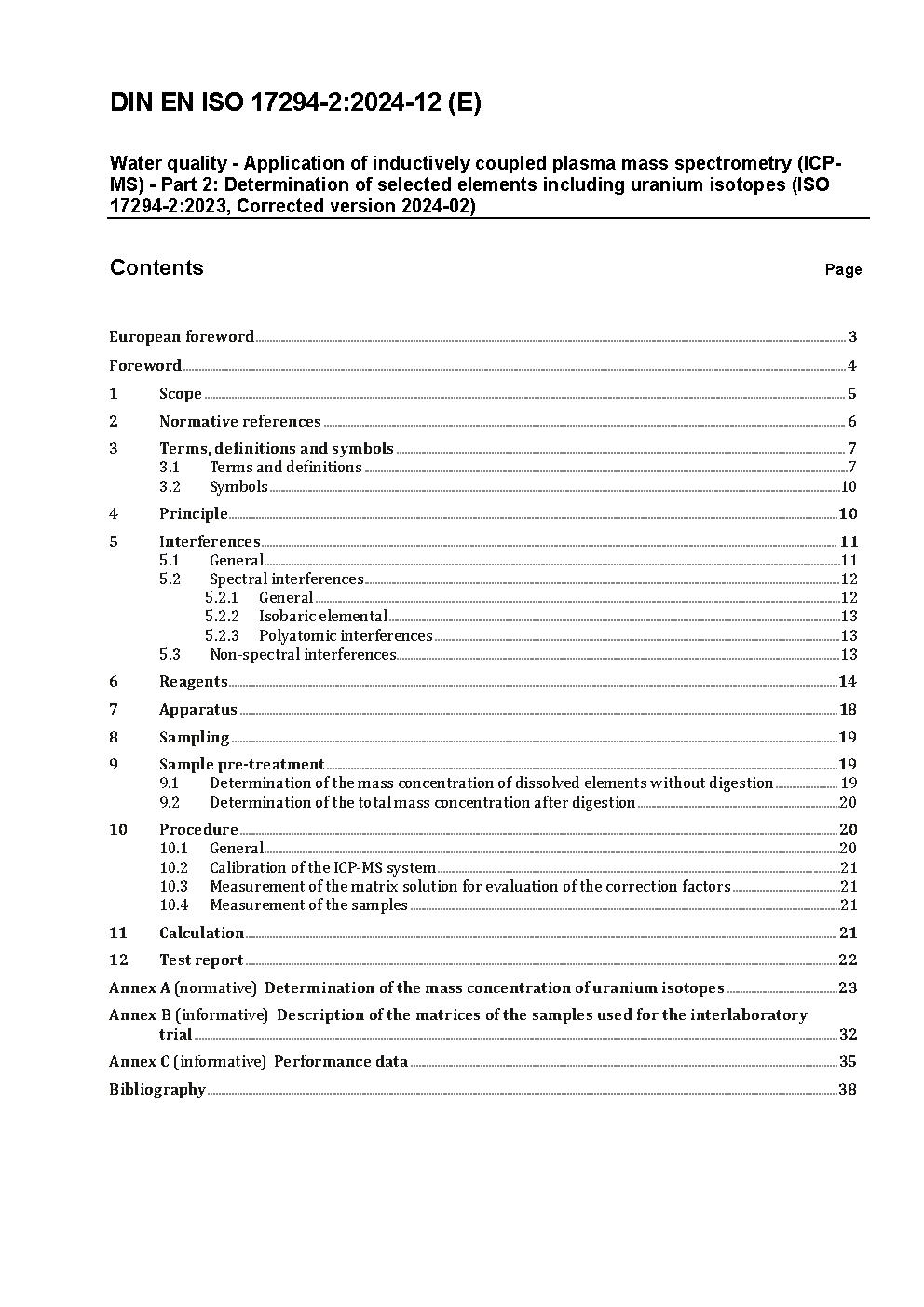
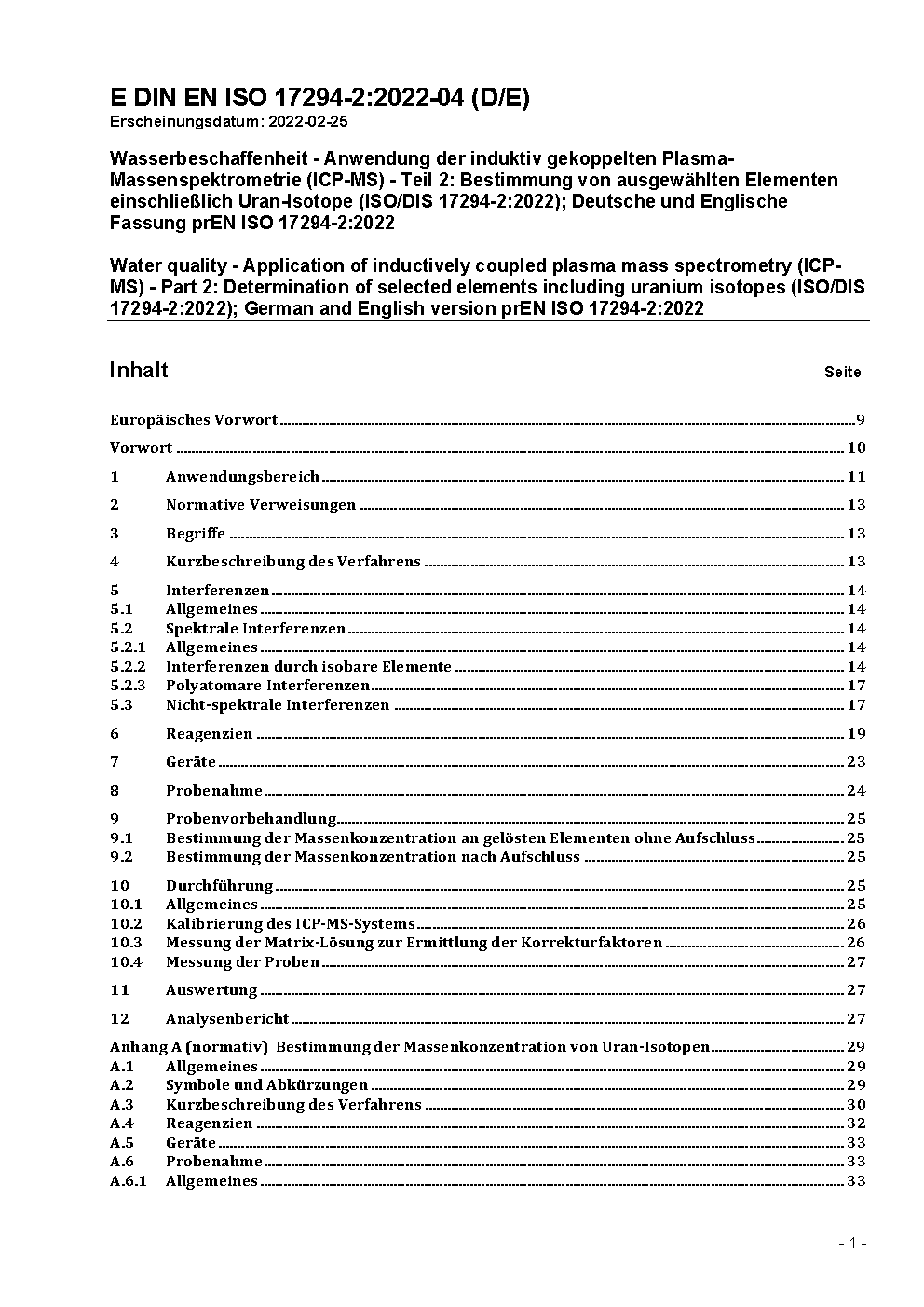
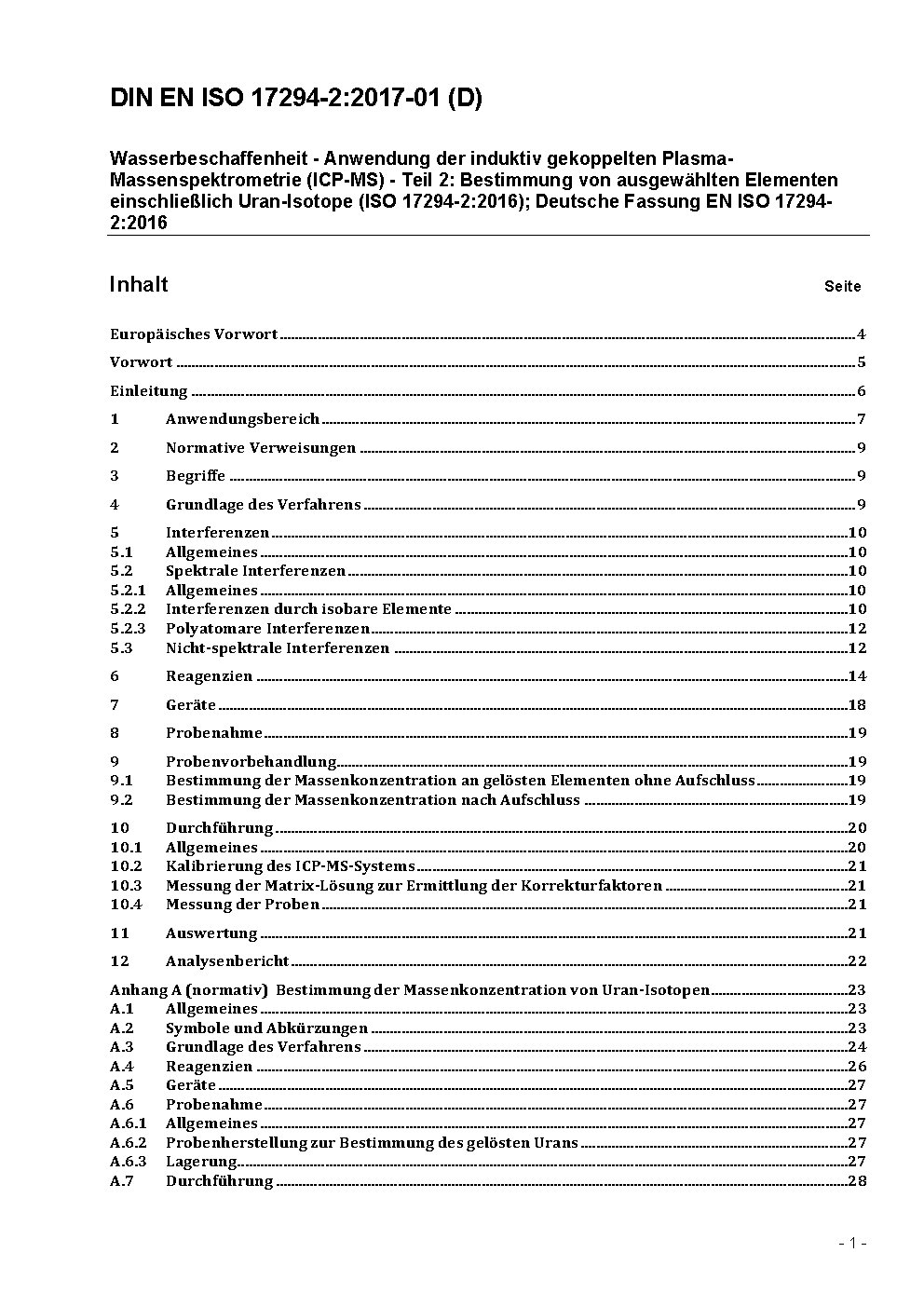
DIN EN ISO 17294-2:2014-12
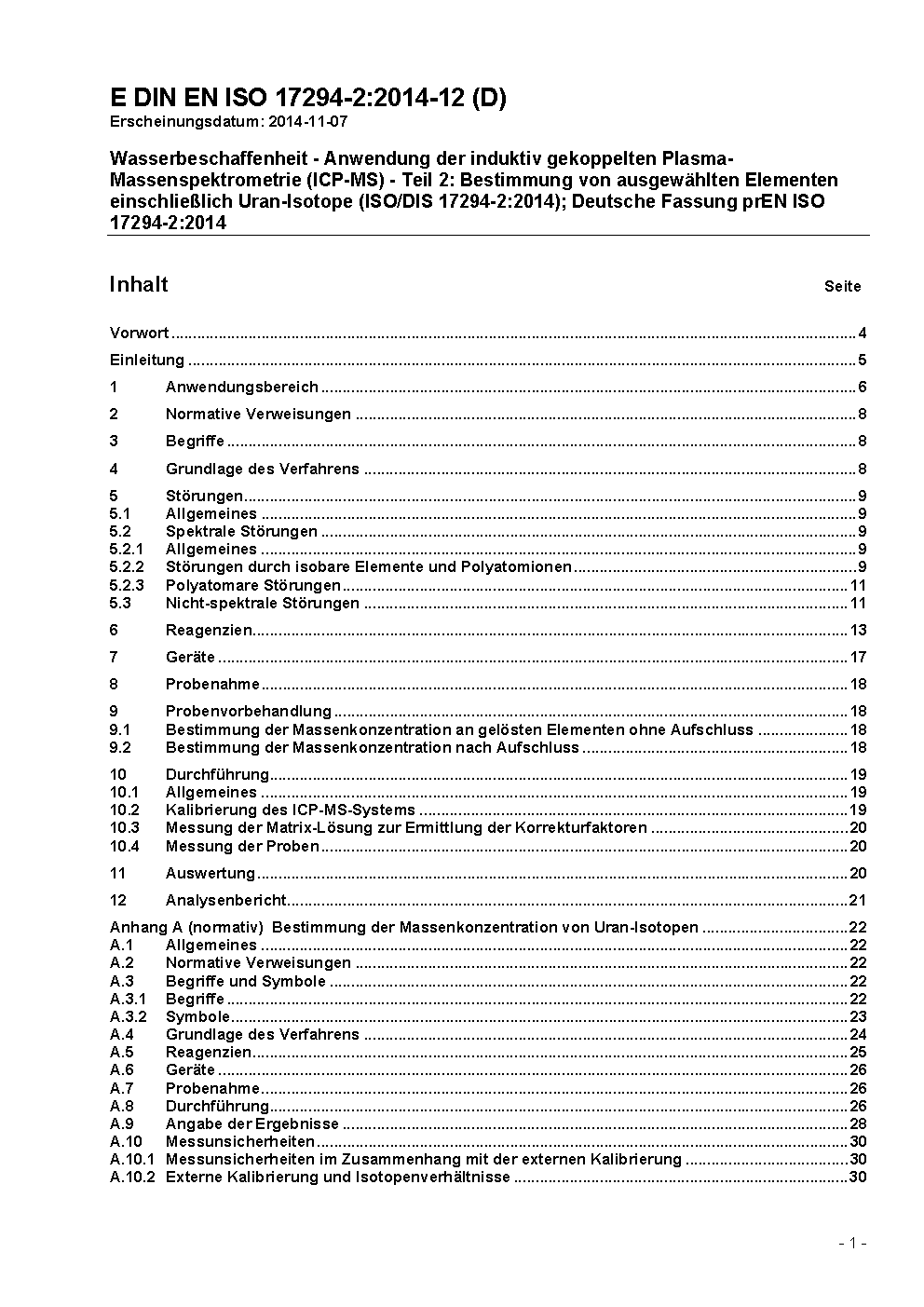
Water quality - Application of inductively coupled plasma mass spectrometry (ICP-MS) - Part 2: Determination of selected elements including uranium isotopes (ISO/DIS 17294-2:2014); German version prEN ISO 17294-2:2014
 Preview
Summary
This document specifies a method for the determination of the elements aluminium, antimony, arsenic, barium, beryllium, bismuth, boron, cadmium, caesium, calcium, cerium, chromium, cobalt, copper, dysprosium, erbium, europium, gadolinium, gallium, germanium, gold, hafnium, holmium, indium, iridium, lanthanum, lead, lithium, lutetium, magnesium, manganese, molybdenum, neodymium, nickel, palladium, phosphorus, platinum, potassium, praseodymium, rubidium, rhenium, rhodium, ruthenium, samarium, scandium, selenium, silver, sodium, strontium, terbium, tellurium, thorium, thallium, thulium, tin, tungsten, uranium and its isotopes, vanadium, yttrium, ytterbium, zinc, and in water [for example drinking water, surface water, ground water, waste water and eluates]. Taking into account the specific and additionally occurring interferences, these elements can also be determined in digests of water, sludges and sediments (for example digests of water as specified in ISO 15587-1 or ISO 15587-2). The working range depends on the matrix and the interferences encountered. In drinking water and relatively unpolluted waters, the lower limit of application is between 0,01 µg/l and 1,0 µg/l for most elements. The working range typically covers concentrations between several pg/l and mg/l depending on the element and pre-defined requirements.
Notes
Prévu pour remplacer DIN EN ISO 17294-2 (2005-02).
Technical characteristics
| Publisher | Deutsche Institut für Normung e.V. (DIN) |
| Publication Date | 12/01/2014 |
| Cancellation Date | 01/01/2017 |
| Page Count | 40 |
| EAN | --- |
| ISBN | --- |
| Weight (in grams) | --- |
No products.
Previous versions